Have you ever marvelled at how a fitness tracker packs heart monitoring, GPS, and AI into something slimmer than a credit card? Wearable tech miniaturization is the driving force, pushing boundaries to make devices smaller, lighter, and more powerful while navigating hurdles in power, heat, and durability. For manufacturers, mastering wearable tech miniaturization means creating products that fit seamlessly into daily life without compromising performance or safety.
The global wearables market is forecast to reach $186.7 billion by 2032, growing at 18.3% CAGR, with miniaturization enabling features like non-invasive glucose sensing. Yet, shrinking components to sub-millimetre scales raises complexity, as McKinsey notes in healthcare wearables, where size constraints must balance with battery life and sensor accuracy.


The Drive Behind Shrinking Device Designs
Consumer demand for unobtrusive gadgets is fuelling wearable tech miniaturization, from earbuds that double as health monitors to implants tracking vital signs. This push aligns with medical needs for discreet, long-term wearables that don’t hinder mobility.
Advancements like 3nm chips deliver 30% more efficiency, but integration challenges persist, per SEMI Engineering. In medical devices, miniaturization enables minimally invasive tools, reducing patient recovery time 20-40%, as Med Device Online discusses.
Sustainability plays a role too, with smaller devices using fewer materials, cutting e-waste 15-25%.
Core Technologies Enabling Compact Innovations
What breakthroughs are making wearable tech miniaturization possible? From flexible substrates to advanced packaging, these techs compress functionality into tiny forms.
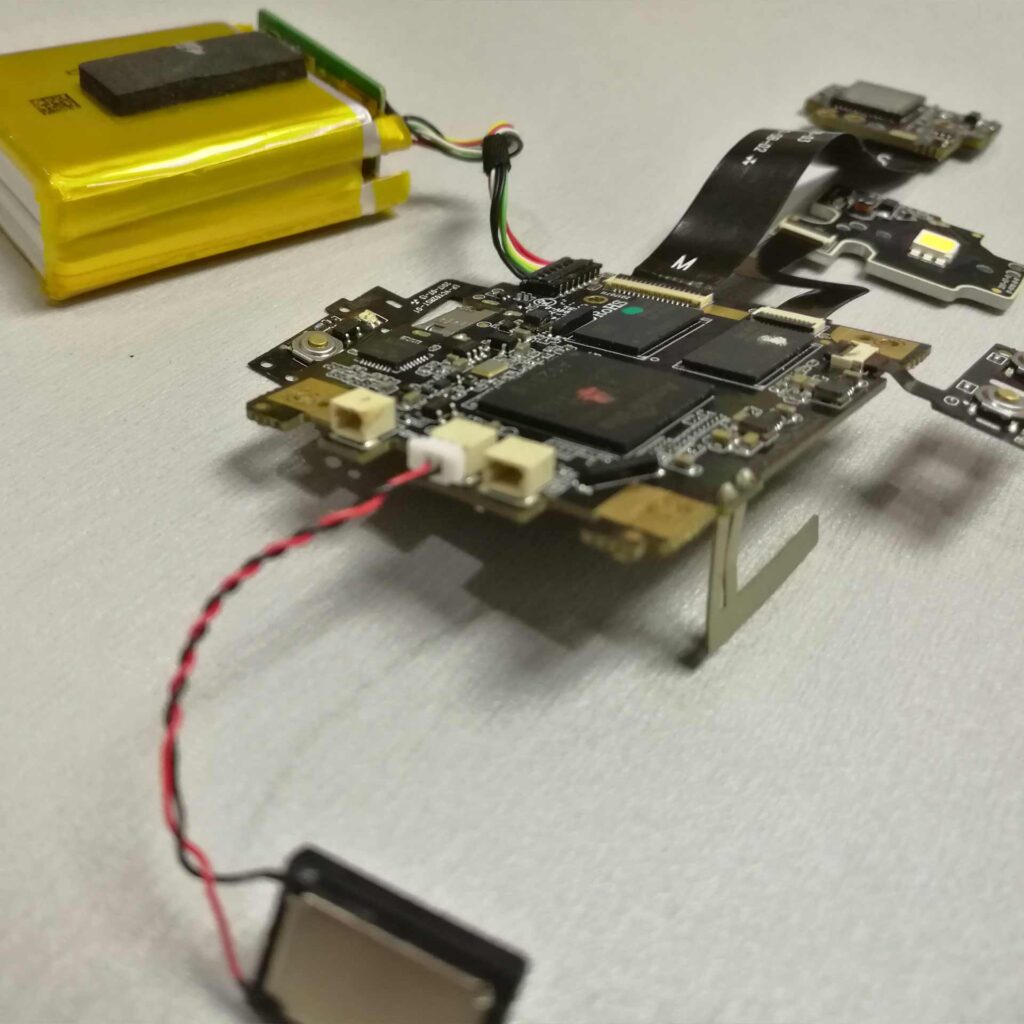
System-on-Chip (SoC) designs integrate multiple functions into one die, shrinking size 40%, as Synopsys explains. Flexible PCBs allow bending without breaking, ideal for conformable wearables, per IDTechEx healthcare report.
Nano-materials like graphene enhance conductivity in micro-spaces, boosting performance 50%, from Nature nanomaterials.
Panasia Solutions applies these in electronics for compact, reliable prototypes.


Navigating the Technical Hurdles
Wearable tech miniaturization brings obstacles like thermal management – tiny chips generate heat that can degrade sensors 30% faster. Solutions involve advanced cooling like micro-channels, reducing temps 20%, per EE Times.
Power density is another issue; batteries must shrink without losing capacity, addressed by solid-state tech offering 2x density, as Power Electronics News covers. Signal integrity in cramped spaces requires low-loss materials, minimizing interference 25%.
Regulatory compliance adds layers, with FDA guidelines for medical minis ensuring safety, from FDA miniaturization.
Performance Gains from Miniaturized Designs
Despite challenges, wearable tech miniaturization yields big wins: devices 50% lighter with 2x battery life through efficient chips.
In medical implants, it enables continuous monitoring without surgery, improving outcomes 15-20%, per MedTech Dive. For wearables, it boosts user adoption by 30% via comfort.
Economic benefits include 10-15% lower production costs from integrated components, as BCG electronics report analyses.


Sector-Specific Applications and Trends
Wearable tech miniaturization transforms sectors: In fitness, sub-gram sensors track biometrics accurately; in healthcare, pill-sized swallowables diagnose internally, per Nature biomedical.
Trends show market growth to $186B by 2032, with medical leading at 25% CAGR. In Asia, China drives innovations in flexible minis, boosting exports 20%.
Panasia Solutions tailors these for consumer electronics applications.
Forward-Looking Developments in Miniaturization
By 2030, wearable tech miniaturization will feature bio-integrable nanos, market at $186B. Developments: Quantum dots for ultra-efficient displays, per WEF future tech.
Deloitte’s trends predict 60% of wearables sub-5mm thick by 2028.
How Panasia Solutions Tackles Miniaturization in Devices


Headquartered in China with facilities in Shenzhen and Dongguan, Panasia Solutions offers end-to-end services from design to manufacturing and logistics. With 25+ years experience, we specialize in high-tech electronics and rigorously test/certify products to international standards.
Explore our consumer electronics capabilities and testing services for wearable tech miniaturization alignment.


Conclusion
Wearable tech miniaturization is reshaping devices. Ready to shrink your designs? Browse our services or contact our team today – let’s make your next product a success story.