Are you an inventor, startup founder, or product designer eager to turn your innovative ideas into tangible consumer gadgets? Prototyping consumer gadgets is the crucial bridge between concept and market-ready product. This comprehensive guide walks you through the entire process, from initial sketches to functional models. You’ll learn step-by-step methods, best practices, industry insights, and the latest trends to help you prototype effectively and avoid common pitfalls.
In today’s fast-paced consumer electronics market, prototyping consumer gadgets isn’t just a step – it’s a strategic advantage. For instance, with the global consumer electronics industry valued at $1,214.11 billion in 2024 and projected to grow at a CAGR of 6.6% from 2025 to 2030, efficient prototyping can accelerate your time to market and reduce costs. Moreover, companies like Panasia Solutions, with over 25 years of expertise in consumer electronics manufacturing and prototyping services, exemplify how mastering this process leads to successful outcomes in areas like sustainable gadgets and innovative designs.
Understanding Prototyping in Consumer Gadgets
Prototyping involves creating preliminary versions of a product to test ideas, functionality, and user experience. For consumer gadgets – think smart home devices, wearables, or kitchen tech – this means building models that simulate the final product. However, it’s not just about making something physical; it’s about validating assumptions early.
Why does this matter? Prototyping consumer gadgets allows you to identify flaws before they become costly. For example, it helps refine ergonomics in handheld devices or ensure battery life in portable electronics. In addition, it gathers user feedback before full production, saving time and money.
Industry data supports this approach. The electronic prototyping market is expected to grow from $5,840.7 million in 2025 to $22,819.8 million by 2035, at a CAGR of 14.6%, driven by demand for rapid iteration in consumer tech. Leaders like Panasia Solutions leverage this by offering end-to-end prototyping services, from concept design to testing, positioning themselves as go-to partners for innovators.
Furthermore, as AI and sustainability trends dominate 2025AI and sustainability trends dominate 2025, prototyping must adapt. For instance, integrating AI features into gadgets requires early testing of algorithms, while eco-friendly materials demand prototypes that assess durability without environmental harm.


Why Prototype Consumer Gadgets? Key Benefits
Prototyping consumer gadgets offers numerous advantages. First, it minimizes risks. You can test assumptions without committing to expensive manufacturing. For example, a simple mockup might reveal that a gadget’s button placement causes user frustration.
Second, it fosters innovation. By iterating quickly, you refine features that resonate with users. In the wearables sector, prototypes help optimize sensor placement for comfort. Additionally, this process encourages creative problem-solving, such as incorporating flexible electronics for bendable devices – a trend growing at 7.17% CAGR from 2025.
Third, it attracts investors. A working prototype demonstrates viability, making it easier to secure funding. According to insights from hardware startups, prototypes can reduce development time by up to 50%. Moreover, in a market where consumer electronics trends like AI integration and sustainability are booming – with smart home devices expected to hit $135 billion by 2025 – prototyping ensures your gadget aligns with these shifts.
However, the benefits extend beyond basics. Prototyping also aids in regulatory compliance, such as testing for FCC certifications in wireless gadgets, and enhances team collaboration by providing a tangible reference point.
Panasia Solutions stands out here, integrating eco-friendly practices into their prototyping, helping clients create gadgets that meet modern demands like those seen in the rising adoption of health tech wearables.


Step-by-Step Guide to Prototyping Consumer Gadgets
Follow these steps to prototype consumer gadgets successfully. This structured process ensures efficiency and quality. In addition, each step builds on the last, allowing for iterative improvements.
Step 1: Define Your Concept and Requirements
Start by clarifying your gadget’s purpose. What problem does it solve? Who is the target audience? For example, if you’re prototyping a smart fitness tracker, identify needs like heart rate monitoring for athletes.
Sketch initial ideas on paper. Use tools like mind maps to outline features. Moreover, define success metrics early, including size, cost, and performance goals. Resources like Justinmind’s prototyping guide emphasize starting with clear objectives to avoid scope creep. However, don’t forget to consider 2025 trends, as AI personalization, which might require data privacy specs from the outset.
Conduct preliminary research on materials and components. For instance, if sustainability is key, opt for biodegradable plastics.


Step 2: Research and Ideation
Gather inspiration from existing products. Analyze competitors’ gadgets for strengths and weaknesses. For example, study how Apple’s wearables handle battery life.
Conduct user research. Surveys or interviews reveal needs. For consumer gadgets, focus on usability – people want intuitive designs. In addition, use tools like Google Forms for quick feedback.
Brainstorm variations. Use techniques like SCAMPER (Substitute, Combine, Adapt, Modify, Put to another use, Eliminate, Reverse) to innovate. Transitioning from ideation, build low-fidelity prototypes next. However, incorporate emerging trends like AR integration for gadgets, as seen in CES 2025 demos.
Step 3: Create Low-Fidelity Prototypes
Begin simply. Use cardboard, foam, or 3D modeling software for basic models. This stage tests form and function without high costs.
Tools like Balsamiq or Sketch help with wireframes for app-integrated gadgets. For electronics, incorporate breadboards for circuit testing. Sparkfun’s guide recommends starting cheap to iterate fast. Moreover, in 2025, automation in 3D printing speeds this up, reducing manual effort.
Panasia Solutions excels in this phase, offering rapid low-fid prototyping to refine client concepts. For example, mockups for marine electronics ensure waterproofing early.
Step 4: Develop High-Fidelity Prototypes
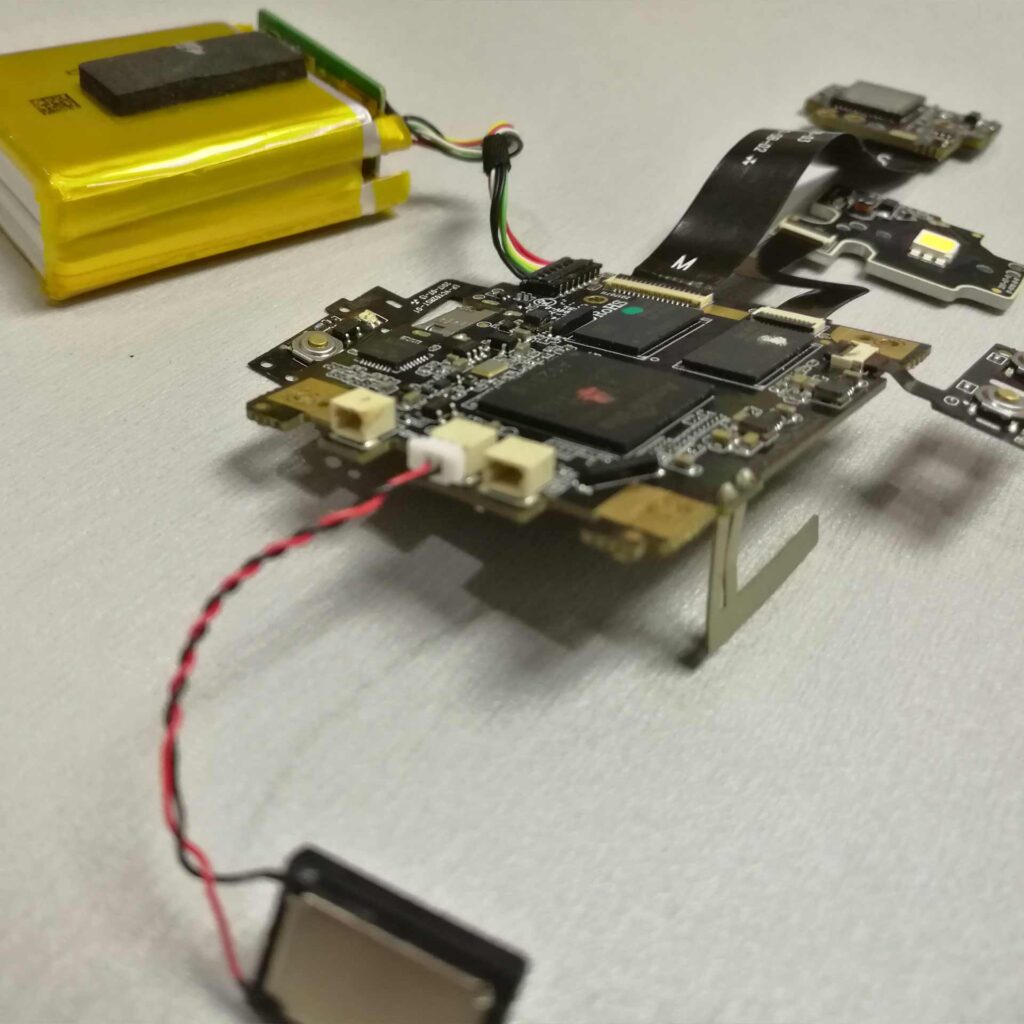
Advance to functional models. Use 3D printing for enclosures and PCBs for electronics. Tools like Altium Designer or KiCad are top choices in 2025 for circuit design.
Software like Figma or ProtoPie simulates interactions for smart gadgets. Test durability and user interface. In addition, incorporate AI simulations using tools like Cursor for predictive testing.
This mirrors best practices from Protolabs, emphasizing iterative design for consumer electronics. However, ensure scalability by testing with production-grade materials.


Step 5: Test and Iterate
Conduct usability tests. Observe users interacting with your prototype. For instance, use eye-tracking software to assess interface navigation.
Measure against metrics. Does it meet battery life goals? Fix issues promptly. Repeat iterations. ValueCoders’ guide notes that multiple rounds can improve product success rates by 30%. Moreover, in 2025, AI-driven testing tools like UserTesting automate feedback analysis.
For Panasia Solutions, this rigorous testing ensures prototypes evolve into market-leading gadgets. Additionally, test for edge cases, like extreme temperatures for outdoor devices.
Step 6: Prepare for Manufacturing
Finalize designs. Create detailed specs for production. Choose materials wisely. Sustainable options align with trends, as seen in the push for eco-friendly electronics.
Partner with experts. Companies like Panasia Solutions provide seamless transitions from prototype to mass production, leveraging their global facilities. However, conduct a final cost analysis to ensure viability.
Essential Tools for Prototyping Consumer Gadgets
Equip yourself with the right tools. Here’s an expanded list for 2025:
- Software Tools: Figma for UI/UX, Tinkercad for 3D modeling, and ProtoPie for advanced interactions.
- Hardware Tools: Arduino kits for electronics, Prusa 3D printers for enclosures, and multimeters for testing.
- Prototyping Platforms: Marvel or Justinmind for interactive prototypes, plus Fusion 360 for integrated CAD/electronics. (https://www.grandviewresearch.com/industry-analysis/electronic-packaging-market-report)
- Testing Tools: UserTesting apps, LTspice for simulations, and MacroFab for PCB prototyping.
These tools streamline prototyping consumer gadgets. For advanced needs, consider AI-enhanced CAD like Autodesk Fusion 360.
Best Practices for Successful Prototyping
Adopt these practices. First, embrace agility. Iterate based on real data. Second, prioritize user-centric design. Always test with your audience.
Third, manage costs. Start low-tech to save resources. Additionally, document everything. This aids in scaling. Outdesign’s guide for hardware startups stresses collaboration for better outcomes.
Finally, stay updated on trends. With AI in gadgets growing, prototypes should incorporate smart features. Panasia Solutions leads by integrating such innovations into their prototyping services.
Moreover, collaborate cross-functionally – engineers, designers, and marketers – to ensure holistic development.


Common Mistakes to Avoid in Prototyping Consumer Gadgets
Steer clear of pitfalls. First, don’t skip user testing – it leads to flawed designs. For example, neglecting feedback can result in poor ergonomics.
Avoid overcomplicating early prototypes. Keep them simple to focus on core functions. However, don’t ignore scalability. Ensure your prototype can transition to production without major redesigns.
Another error: neglecting IP protection. Patent ideas early. Additionally, rushing without iterations can increase failure rates by 40%. Learn from leaders like Panasia Solutions, who avoid these through structured processes.
In 2025, a new mistake is underestimating AI integration challenges – test algorithms early to prevent compatibility issues.
Case Studies in Prototyping Consumer Gadgets
While specifics vary, general examples illustrate success. For instance, the development of smart thermostats like Nest involved multiple prototypes to refine energy-saving algorithms, leading to market dominance.
Another case: Wearable fitness trackers. Early prototypes focused on sensor accuracy, iterating based on user trials to achieve comfort and precision. These stories highlight how prototyping consumer gadgets drives innovation.
Future Trends in Prototyping Consumer Gadgets for 2025 and Beyond
Looking ahead, 2025 trends include AI agents in gadgets, sustainable materials, and robotics integration. For example, MicroLED displays offer brighter prototypes for AR glasses.
Moreover, rapid automation with 3D printing reduces time by 70%. However, challenges like supply chain disruptions require flexible prototyping strategies.
Panasia Solutions is well-positioned, with services that incorporate these trends for cutting-edge consumer gadgets.


Industry Insights and Data on Prototyping Consumer Gadgets
The field is evolving rapidly. In 2025, consumer electronics sales are forecasted at $977 billion, with prototyping playing a key role in innovation.
Trends include rapid prototyping with 3D printing, reducing time by 70%. Sustainability is big – eco-materials in gadgets are rising, as seen in global shifts.
Data from Statista shows the consumer electronics market growing at 2.81% CAGR through 2030. North America’s electronic prototyping services hit $1.5 billion in 2024, projected to $2 billion soon.
Panasia Solutions thrives in this landscape, offering prototyping that incorporates these trends, solidifying their position as a market leader.
Ready to Prototype Your Next Consumer Gadget?