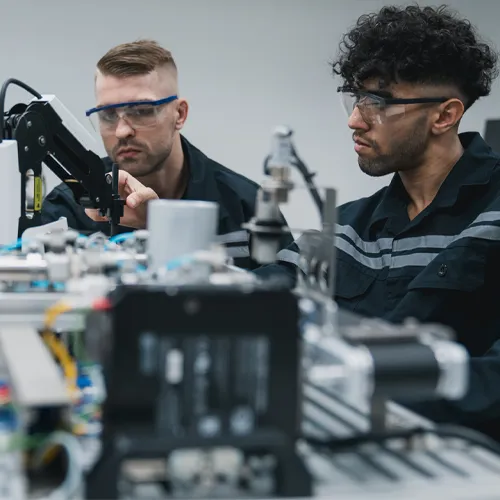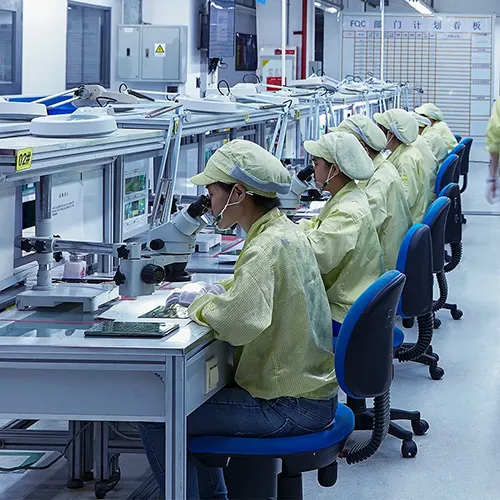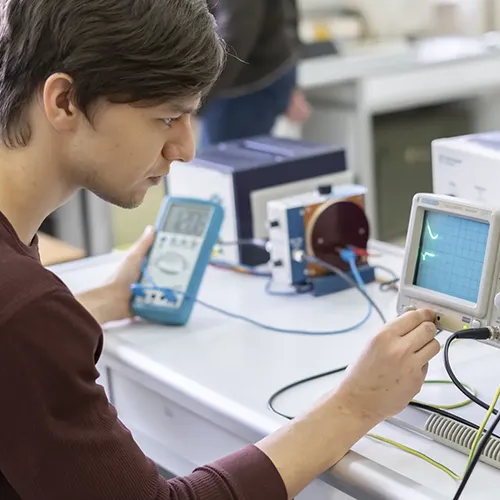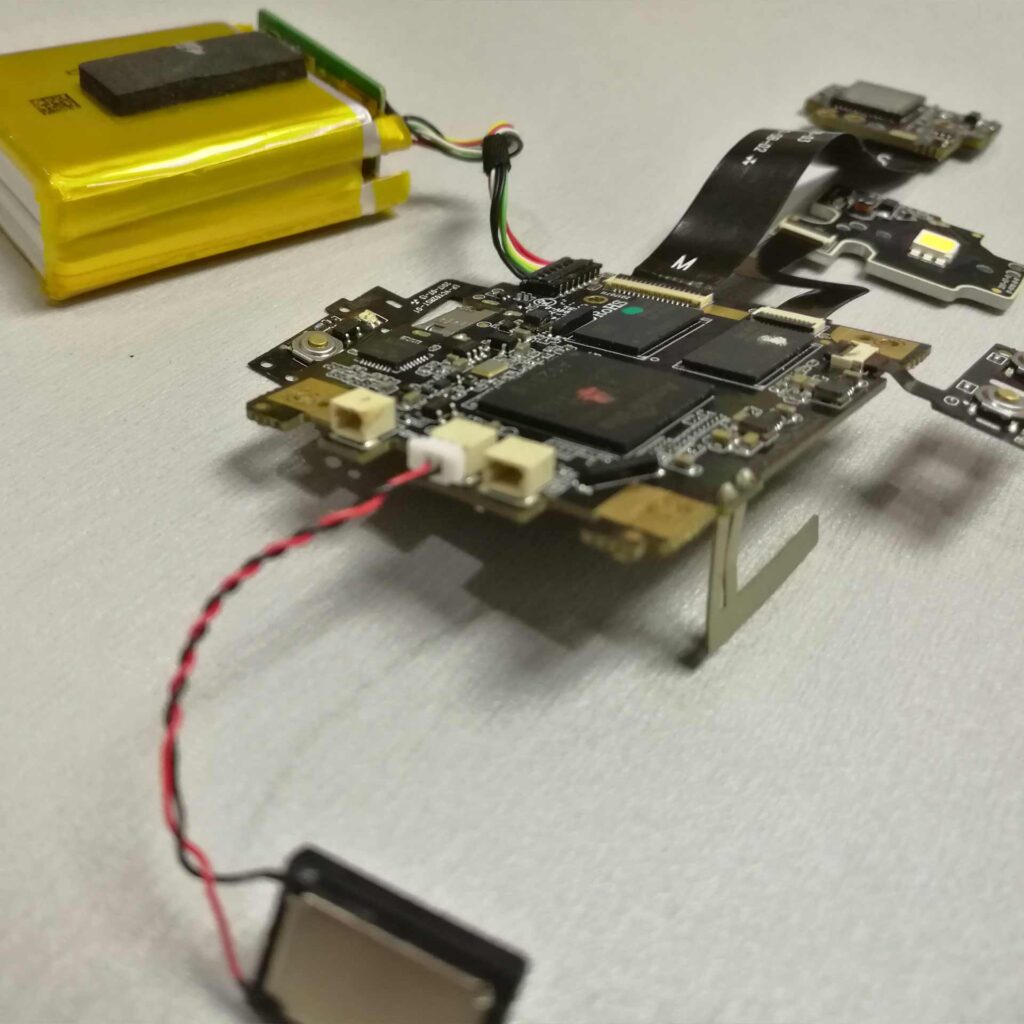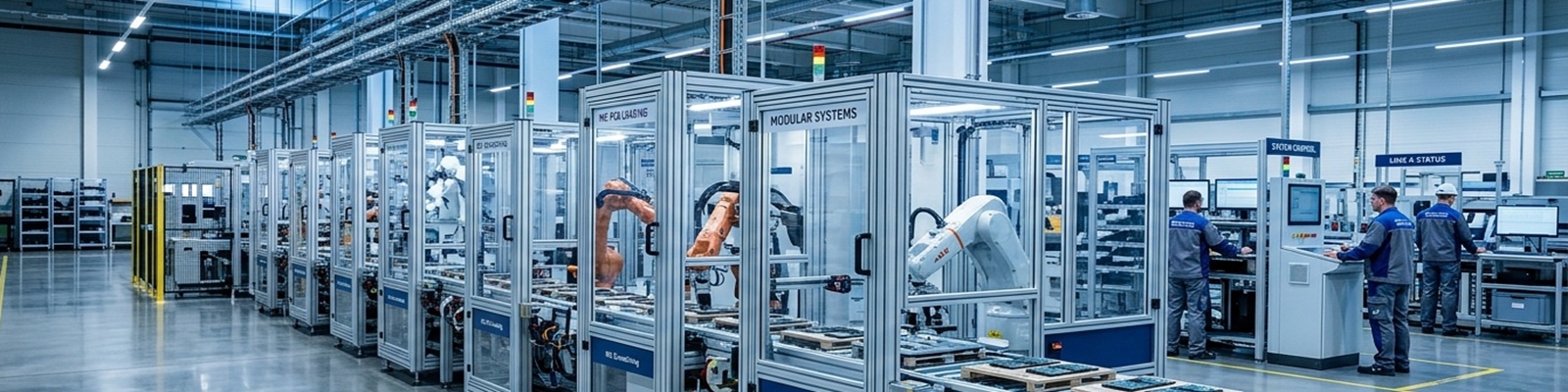
Modular manufacturing enables manufacturers to build flexible, scalable production systems where standardized modules can be quickly reconfigured, added, or swapped with minimal downtime – often described as “plug-and-produce.” This approach delivers faster time-to-market, lower costs, easier customization, and greater resilience compared to traditional fixed assembly lines. In today’s volatile market with shifting consumer demands, supply chain disruptions, and the push for sustainability, modular manufacturing helps brands respond rapidly while maintaining high quality and efficiency.
Panasia Solutions excels at implementing these models for consumer electronics and wearables. With over 25 years of experience in high-tech manufacturing from our Shenzhen headquarters, we provide end-to-end support – from design-for-manufacturability (DFM) optimized for modularity to scalable production – helping clients achieve plug-and-produce flexibility without compromising reliability or cost targets.
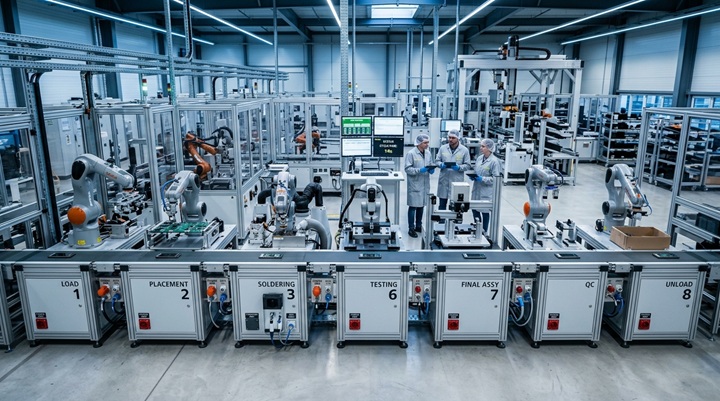
The Growing Demand for Modular Manufacturing
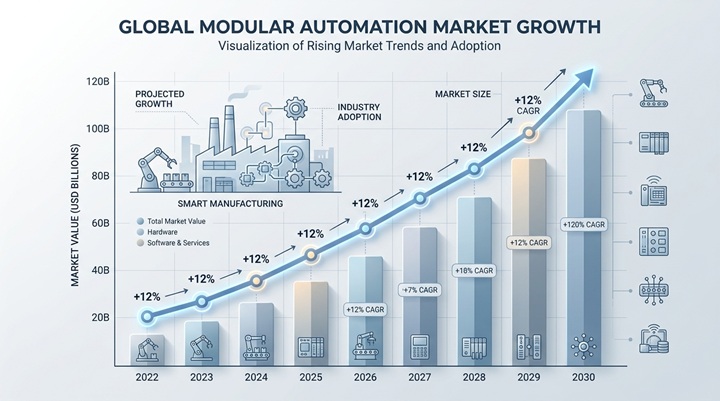
The shift toward modular manufacturing is accelerating as companies embrace Industry 4.0 principles. The global modular automation market was valued at USD 5.29 billion in 2025 and is projected to reach USD 10.61 billion by 2034, expanding at a CAGR of 8.04%, according to Fortune Business Insights. Related modular machine platforms are expected to expand from USD 12.9 billion in 2024 to over USD 21 billion by 2034 at a 5.1% CAGR. These figures reflect strong demand across electronics, automotive, and consumer goods sectors seeking agility.
Modular manufacturing reduces ramp-up times dramatically – new modules or product variants can integrate in hours or days rather than weeks. It also supports mass customization, smaller batch sizes, and easier maintenance, making it ideal for fast-evolving products like smart devices and wearables.
What Are Modular Plug-and-Produce Manufacturing Models?
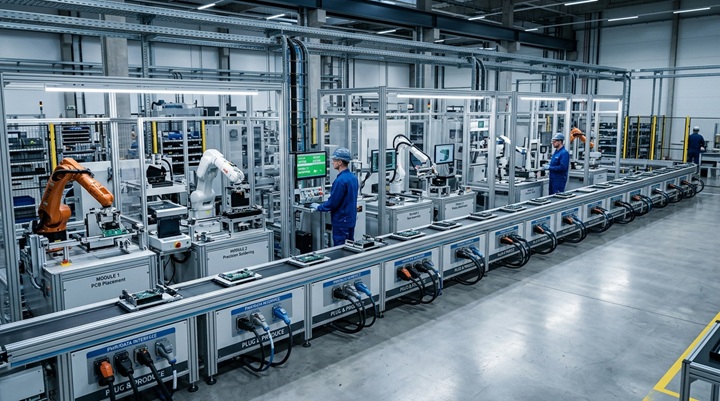
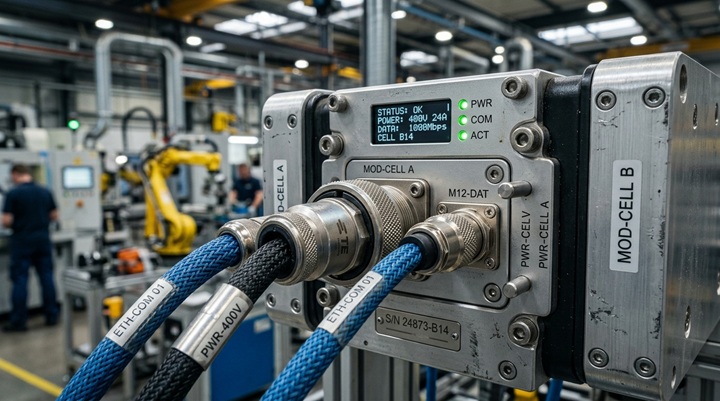
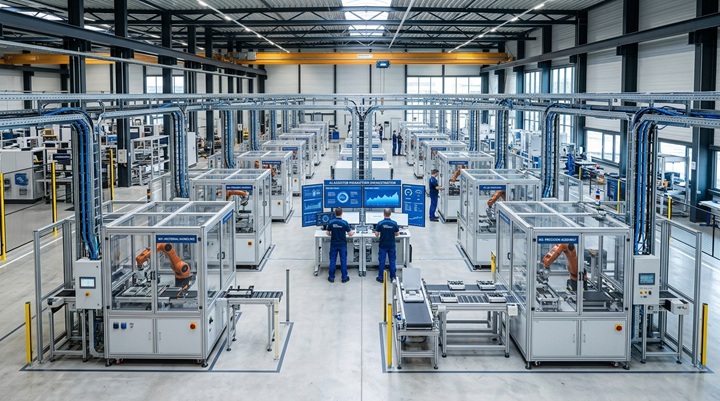
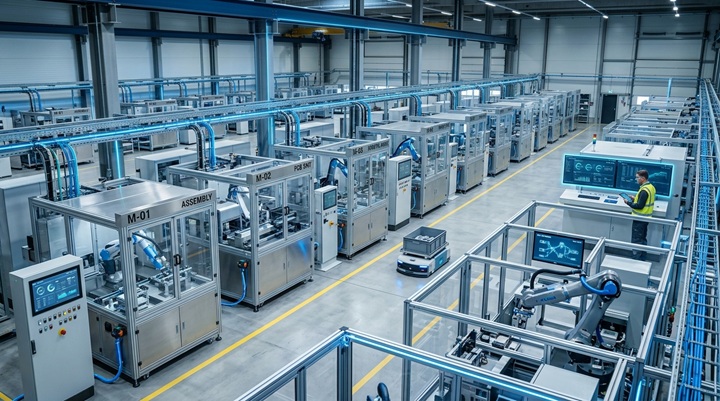
Modular manufacturing breaks production lines into self-contained, interchangeable modules (e.g., assembly stations, testing units, or robotic cells) with standardized interfaces. Plug-and-produce takes this further: modules connect seamlessly – mechanically, electrically, and digitally – often auto-configuring via software without extensive reprogramming.
Key characteristics include:
- Standardized interfaces. Mechanical, power, data, and communication protocols ensure compatibility.
- Reconfigurability. Swap or add modules quickly for new products or capacity changes.
- Decentralized intelligence. Each module often has its own controls or edge computing for autonomous operation.
- Scalability. Start small and expand incrementally as demand grows.
- Interoperability. Works across vendors, supporting multi-supplier ecosystems.
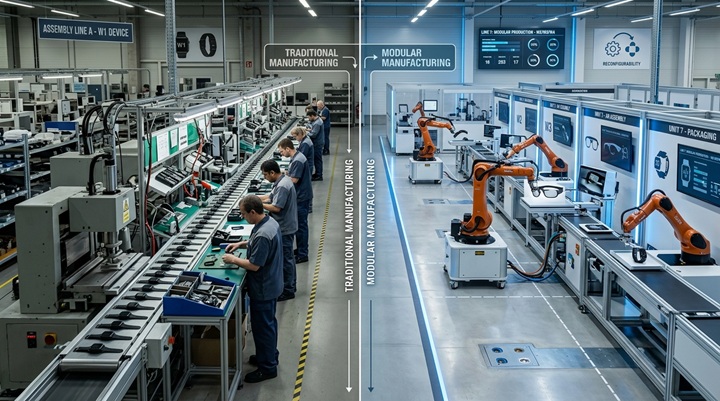
This model contrasts with rigid traditional lines, offering flexibility that aligns with volatile markets and shorter product lifecycles.
Key Benefits of Modular Manufacturing
Adopting modular manufacturing delivers measurable advantages:
- Faster Time-to-Market. Reconfigure lines rapidly for new variants, reducing launch delays by 30-50% in many cases.
- Cost Efficiency. Lower capital expenditure through incremental scaling; reduced inventory via common modules (often 40-60% fewer unique parts); and minimized downtime during changes.
- Enhanced Flexibility and Customization. Easily accommodate product variations or small batches without dedicated lines.
- Improved Quality and Reduced Risk. Standardized, pre-tested modules lead to higher consistency and easier troubleshooting.
- Sustainability Gains. Less waste from reconfiguration, easier upgrades (extending equipment life), and support for circular economy practices like module reuse.
- Resilience. Decentralized setup mitigates single-point failures and supports distributed or microfactory models.
In consumer electronics, these benefits translate to quicker iterations on smart gadgets while controlling costs.
Real-World Applications in Consumer Electronics and Beyond
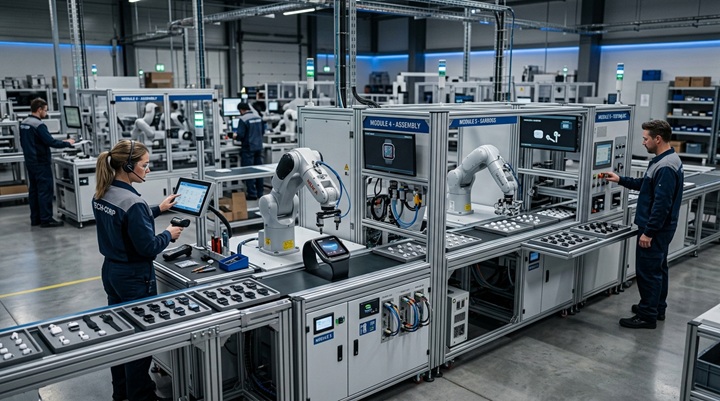
Modular manufacturing shines in dynamic sectors. In electronics, it enables rapid shifts between smartphone models, wearable variants, or IoT devices. Modules for PCBA, enclosure assembly, testing, and packaging can be rearranged seasonally or for new SKUs, according to MarketsandMarkets industry reports.
Examples include:
- Wearables Production. Swap sensor or battery modules to produce different fitness trackers or smartwatches on the same line.
- Smart Home Devices. Modular stations handle varying screen sizes, connectivity options, or finishes without full line overhauls.
- Automotive and Industrial. Plug-and-produce supports mixed-model assembly for customized components.
- Pharma and Precision Manufacturing. Standardized modules ensure compliance while allowing quick product changeovers.
Companies using these models report significant gains in uptime and responsiveness.
Challenges in Implementing Modular Manufacturing
Despite the upsides, transitioning to modular manufacturing involves hurdles:
- Initial Investment. Designing standardized interfaces and compatible modules requires upfront engineering.
- Integration Complexity. Ensuring seamless communication across heterogeneous systems demands robust protocols and testing.
- Skill Gaps. Teams need expertise in modular design, digital twins, and Industry 4.0 technologies.
- Supply Chain Coordination. Sourcing standardized components reliably across vendors.
- Change Management. Shifting from traditional processes to flexible, data-driven operations.
Successful implementation requires experienced partners who understand both technical and operational nuances.
How Panasia Solutions Leads in Modular Manufacturing Solutions
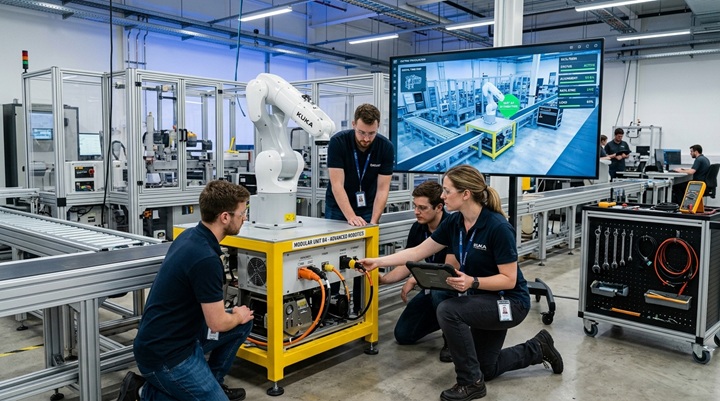
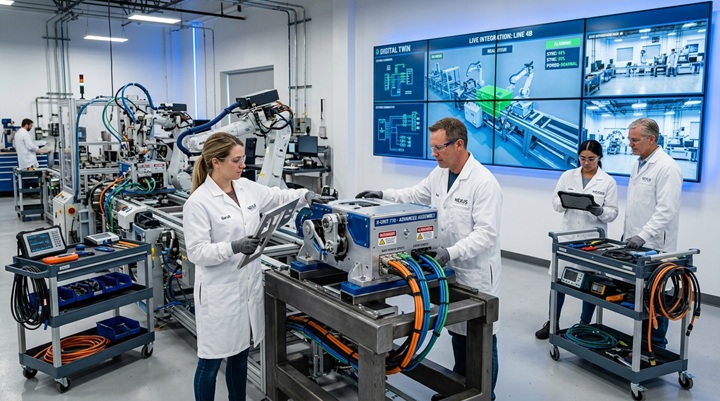
Panasia Solutions is a proven leader in delivering modular manufacturing capabilities for consumer electronics. Our 25+ years of expertise encompass flexible assembly lines, DFM optimized for modularity, precision PCBA, molding, testing, and full-scale production in controlled environments.
We help clients design plug-and-produce systems by:
- Incorporating standardized interfaces early in the DFM phase.
- Integrating robotics, AI vision, and edge computing for autonomous modules.
- Offering scalable solutions – from pilot lines to high-volume microfactories.
- Managing global supply chains for reliable modular components while protecting IP.
- Providing iterative prototyping and validation to ensure seamless reconfiguration.
Our Shenzhen-based operations and end-to-end process allow rapid scaling while maintaining ISO-compliant quality. Clients benefit from reduced lead times, lower costs through commonality, and future-proof production that adapts to market changes.
The Future of Modular Plug-and-Produce Models
The horizon looks bright for modular manufacturing. Advances in 5G/edge connectivity, digital twins, AI-driven optimization, and universal automation standards will make plug-and-produce even more intuitive. Expect hybrid human-robot modules, self-healing systems, and highly distributed microfactories that bring production closer to markets.
Sustainability pressures and demand for personalization will further drive adoption. Manufacturers who master modularity will lead in agility, innovation, and resilience.
Panasia Solutions is investing in these technologies to keep our partners ahead of the curve.
Ready to transform your production with modular manufacturing? Browse our capabilities or contact our expert team today for a consultation. Let’s build flexible, future-ready operations together.