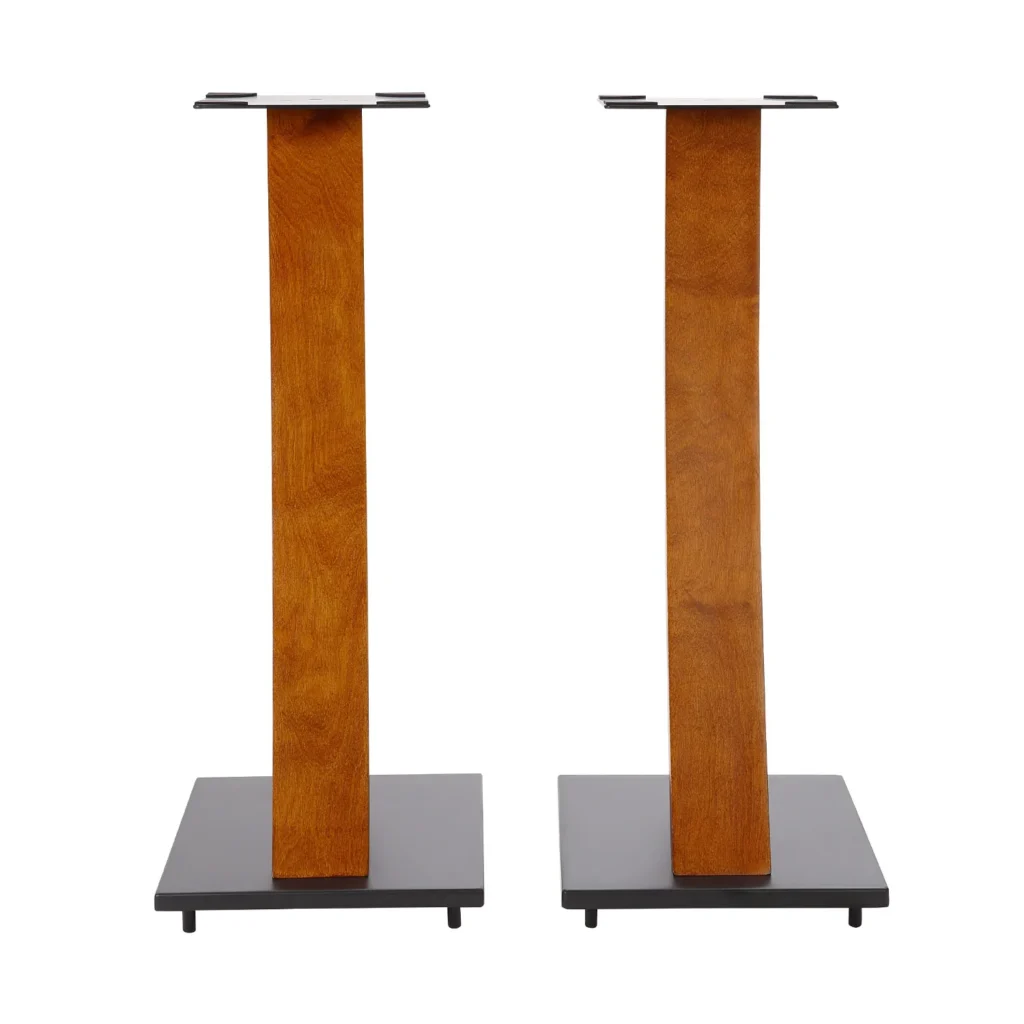
A finished speaker stand can look deceptively simple. There is a base, a column, a platform and somewhere for the speaker to sit. Yet turning that relatively straightforward concept into a reliable product that can be manufactured consistently at scale involves considerably more than assembling a few components.
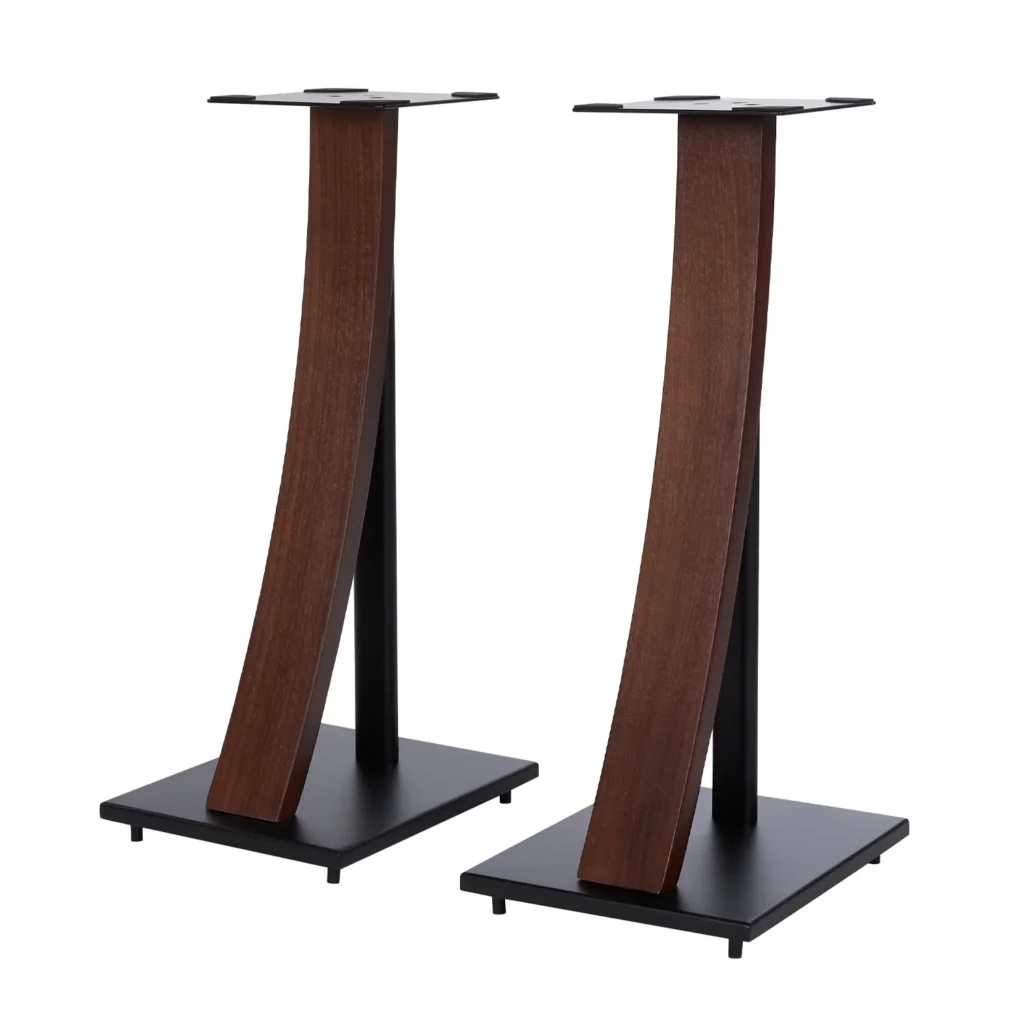
For Eximus, developing and manufacturing speaker stands and mounts required a combination of product thinking, materials sourcing, production expertise and quality control. Panasia Solutions provided end-to-end support, including materials sourcing, design and production assistance, packaging and logistics. The relationship sits within a much longer history of Panasia developing and manufacturing physical products for global markets.
What did Panasia Solutions do for Eximus?
Panasia supported Eximus with materials sourcing, design and production assistance, as well as packaging, shipping and logistics. The project illustrates how custom speaker stand manufacturing involves far more than producing the finished product. It requires a coordinated process that connects design, production, quality and delivery.
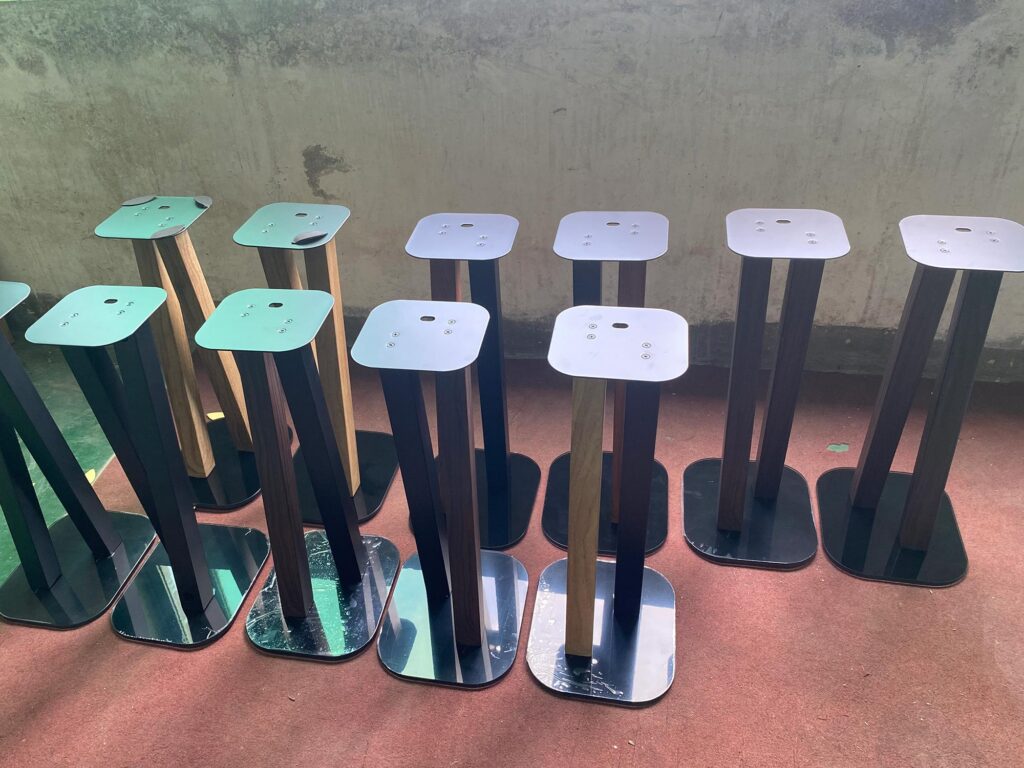
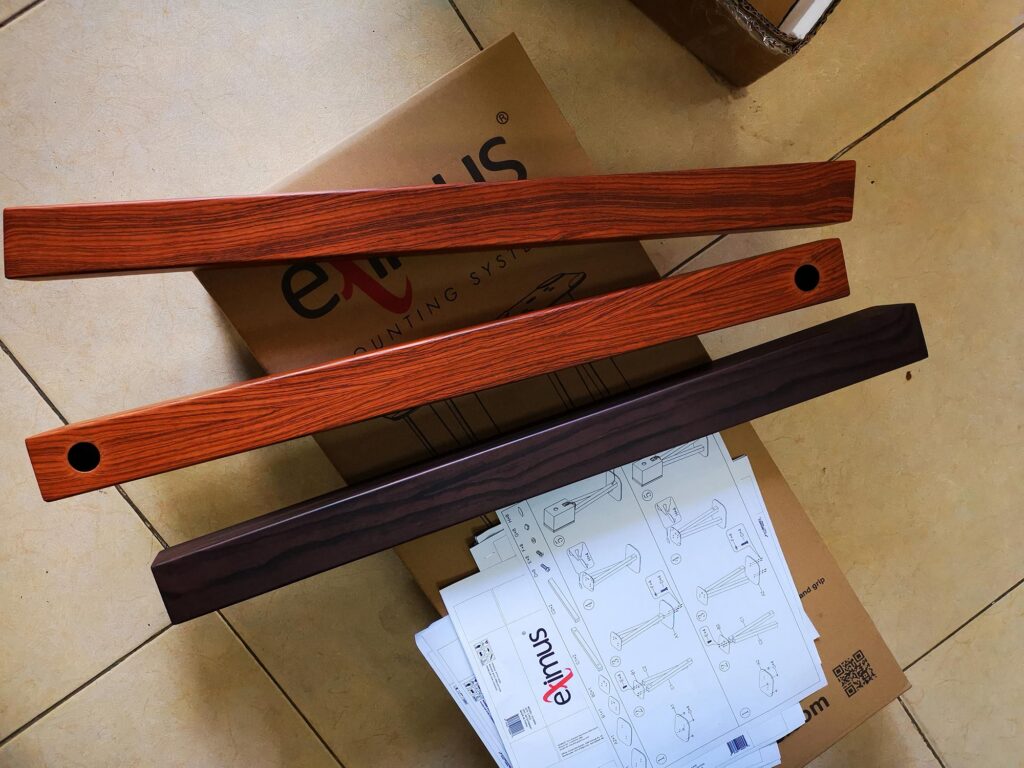
Why Speaker Stand Manufacturing Is More Complex Than It Looks
The job of a speaker stand is straightforward in principle. It needs to provide a stable platform at an appropriate height while supporting the speaker safely and fitting naturally into its environment.
Manufacturing one consistently is a different matter.
A commercially viable speaker stand needs to account for factors such as:
- Material selection
- Structural stability
- Weight and balance
- Manufacturing tolerances
- Tooling requirements
- Surface finishing
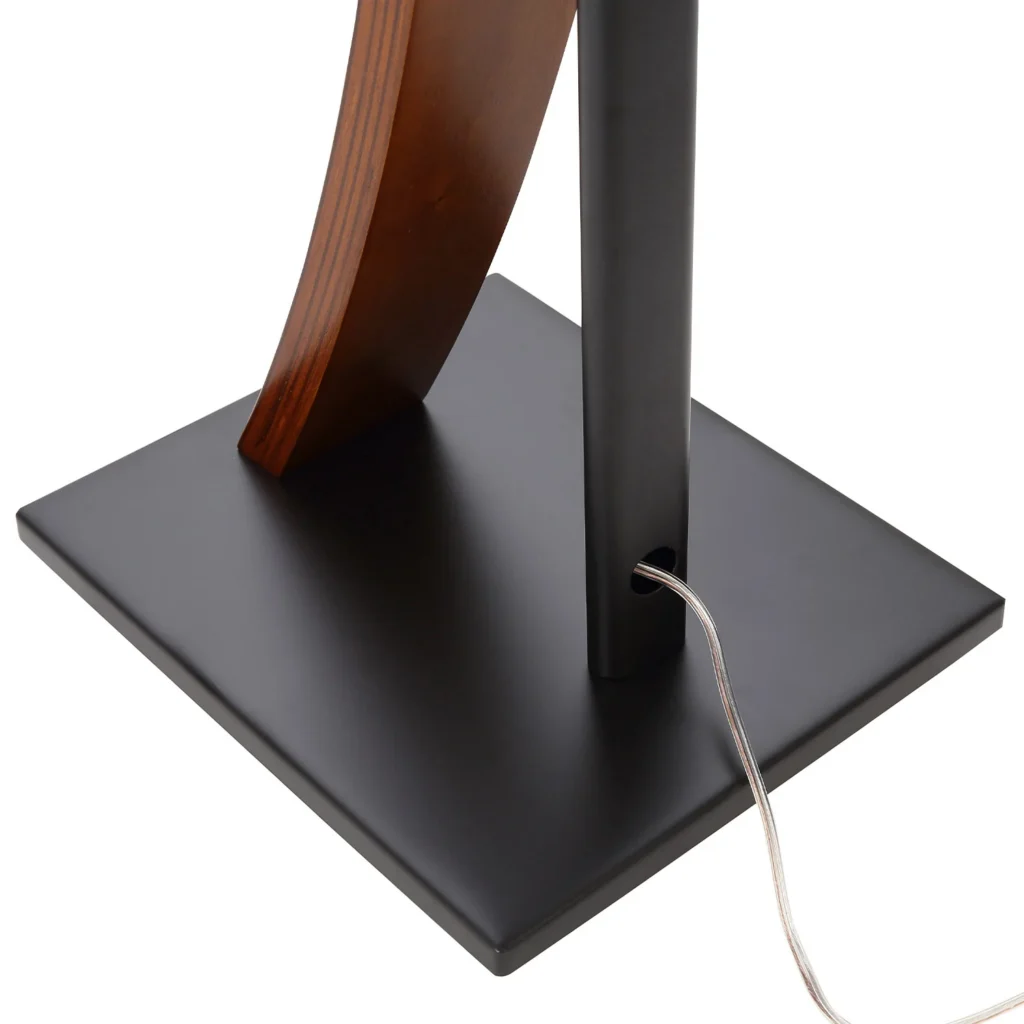
- Cable management
- Compatibility with different speaker designs
- Repeatable production quality
- Packaging and transportation
These considerations become particularly important when a product moves beyond prototypes and into larger-scale production.
A prototype can demonstrate that an idea works. Mass production has to demonstrate that the same idea can be reproduced accurately and consistently.
That distinction is at the heart of successful product manufacturing.
For businesses developing physical products, it is also one of the reasons the choice of manufacturing partner matters so much.
The Eximus Story Begins With a Manufacturing Challenge
Eximus is a manufacturer of speaker stands and speaker mounts, with products designed for different audio applications. Panasia’s portfolio describes its role with Eximus as providing end-to-end support, including sourcing materials, assisting with design and production, and managing packaging, shipping and logistics.
The challenge in a project like this is not simply producing a single speaker stand. The manufacturing process needs to turn a defined product concept into something that can be produced repeatedly, inspected consistently and delivered efficiently. That requires attention to the details that customers rarely see.
A product can look excellent in a prototype photograph. That does not automatically mean it is ready for reliable commercial production. Tooling needs to work. Components need to fit. Materials need to meet the requirements. Production needs to be repeatable. Finished products need to pass quality checks. Packaging needs to protect them during transportation.
In other words, the manufacturing process becomes part of the product itself.
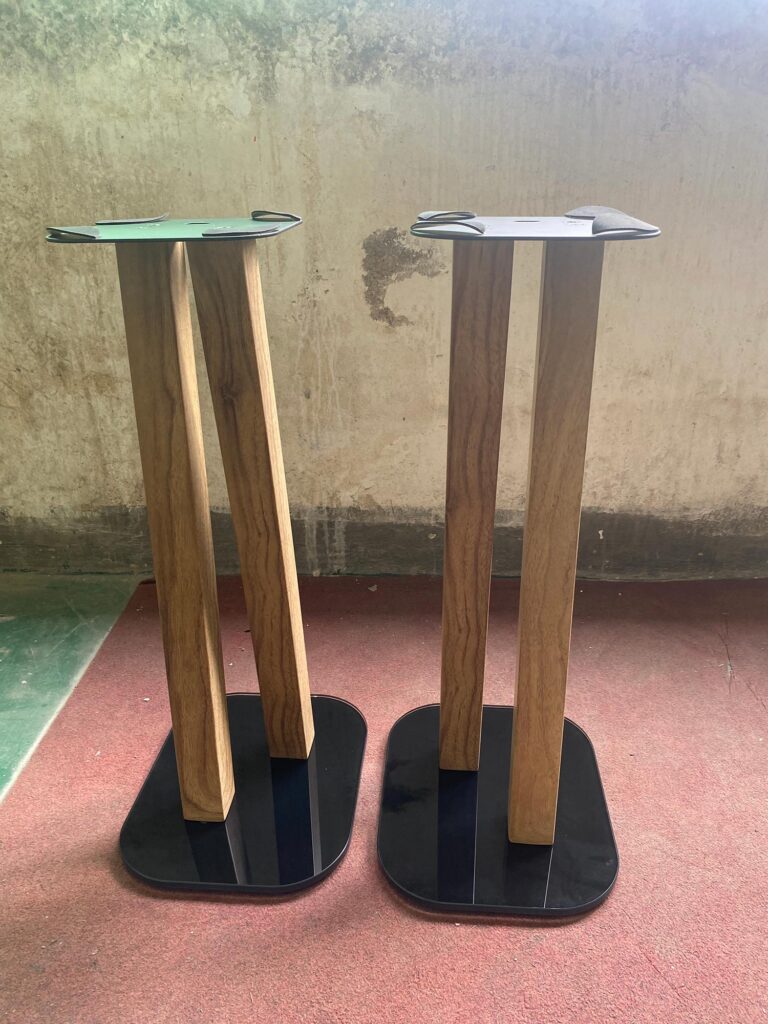
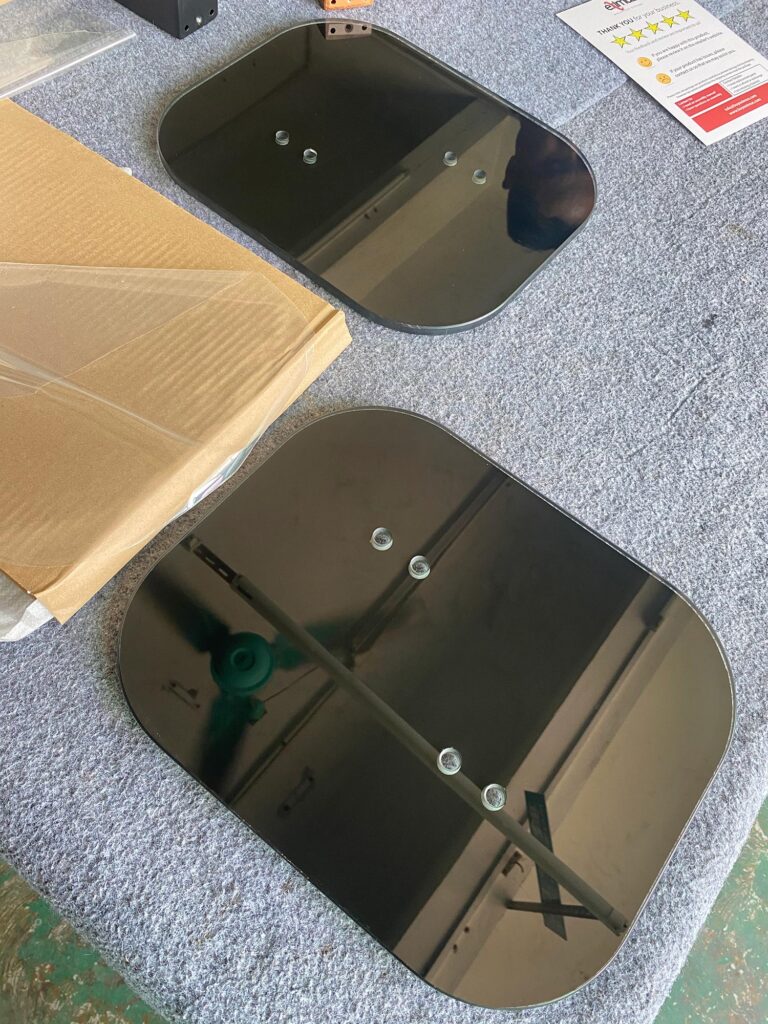
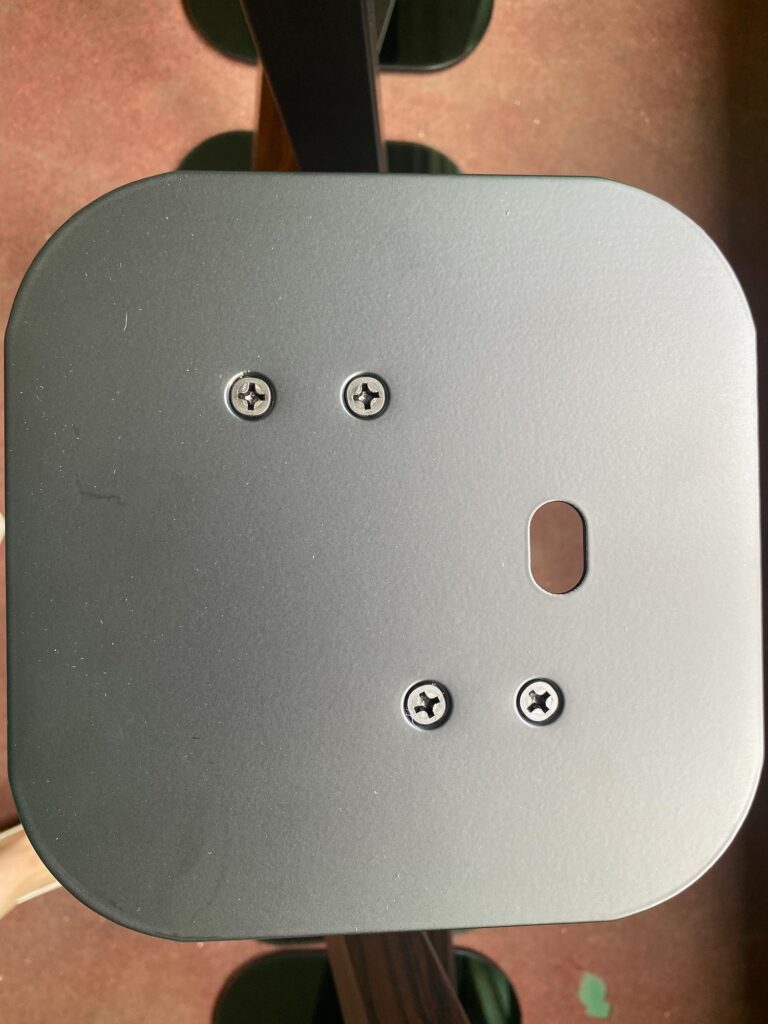
From Design Intent to Manufacturing Reality
One of the most important stages in product manufacturing is translating design intent into something that can be produced repeatedly. The original design might specify a particular shape, dimension, finish or connection method. Production then has to reproduce those requirements within appropriate tolerances.
That requires decisions about materials, tooling, machining and production processes.
For speaker stands, even relatively small inconsistencies can affect the finished product. Components need to fit correctly. Bases need to remain stable. Surfaces need to meet the expected finish standard. Mounting points need to align.
This is where manufacturing engineering becomes part of product development.
Panasia’s broader manufacturing process is built around supporting products from concept and engineering through prototyping, testing, validation and mass production. The company says its experience spans more than 25 years and includes design, engineering, manufacturing and global logistics.
That approach matters because manufacturing problems are usually easier to address before production is fully scaled.
A design that works perfectly as a one-off prototype may need modification once production volumes increase. Tooling, material availability, production speed and quality control can all influence the final manufacturing strategy.
The Importance of Tooling in Custom Speaker Stand Manufacturing
Tooling is one of the less visible aspects of manufacturing, but it can have a major influence on the finished product. A tool, mould, fixture or production aid may be responsible for ensuring that components are produced in the correct shape and position. When a product moves into larger production volumes, the quality and accuracy of that tooling can directly affect consistency.
For a custom speaker stand manufacturer, tooling therefore cannot simply be considered an expense associated with getting production started. It is part of the infrastructure that allows a product to be reproduced reliably.
Panasia’s work with Eximus included support around production and manufacturing. The company’s portfolio describes the broader engagement as sourcing materials, assisting with design and production, and managing packaging and shipping.
For businesses developing their own products, this highlights an important consideration. The right manufacturing partner needs to think beyond the first successful sample. The real test comes when that product has to be produced again and again while maintaining the required quality.
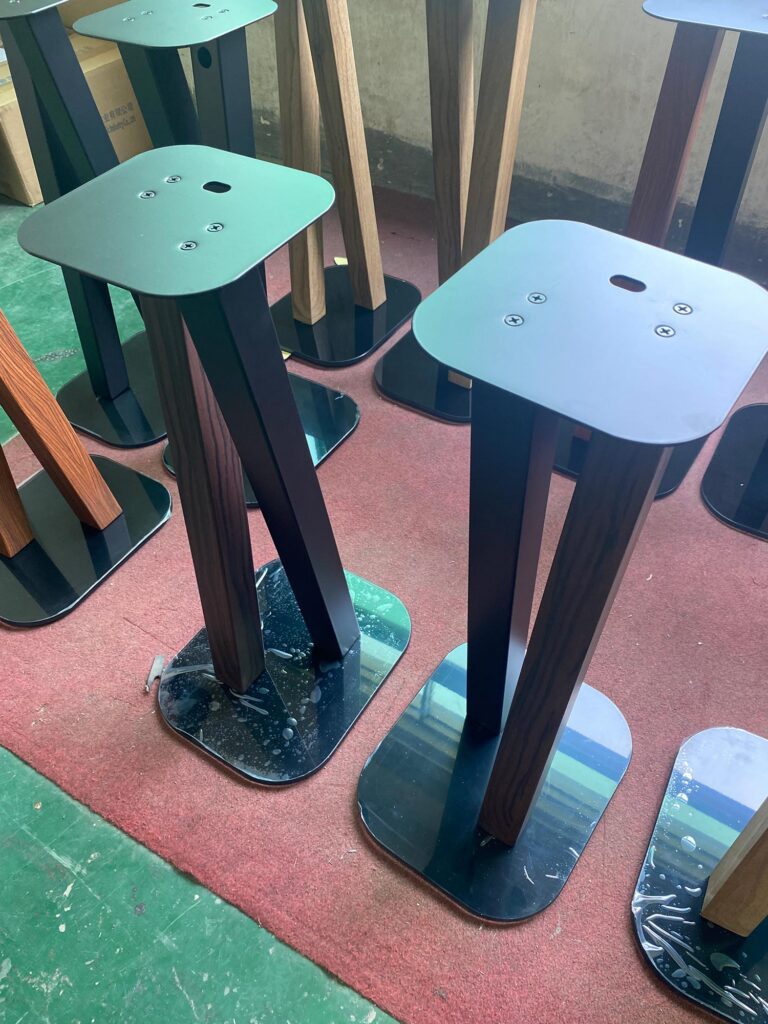
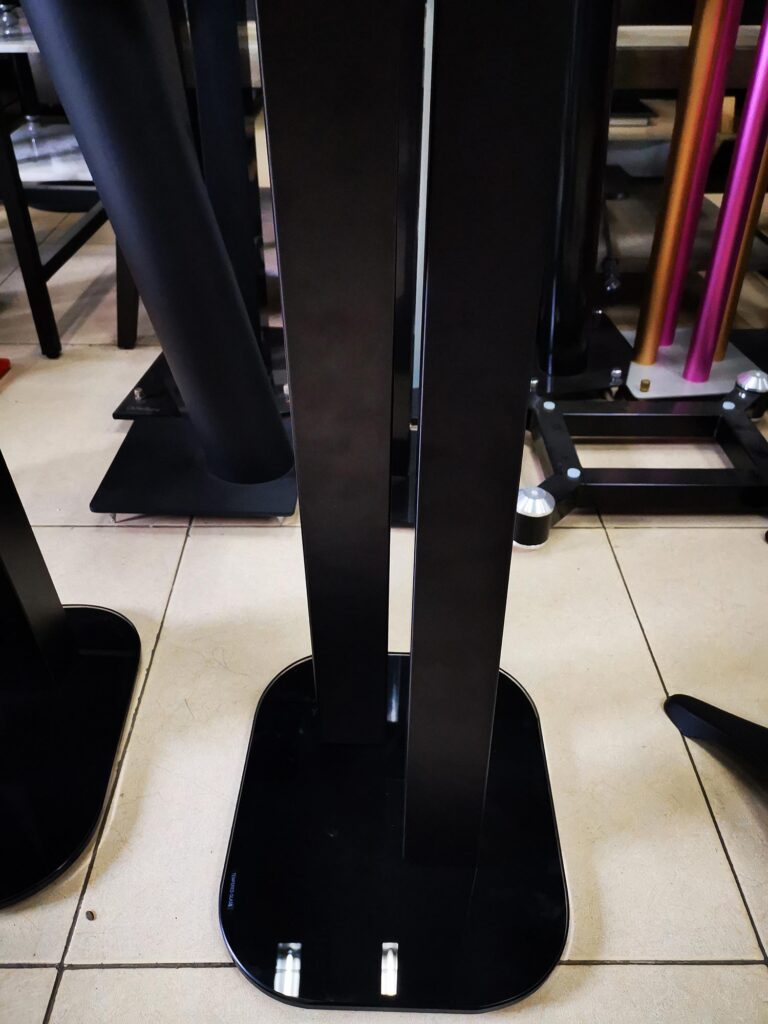
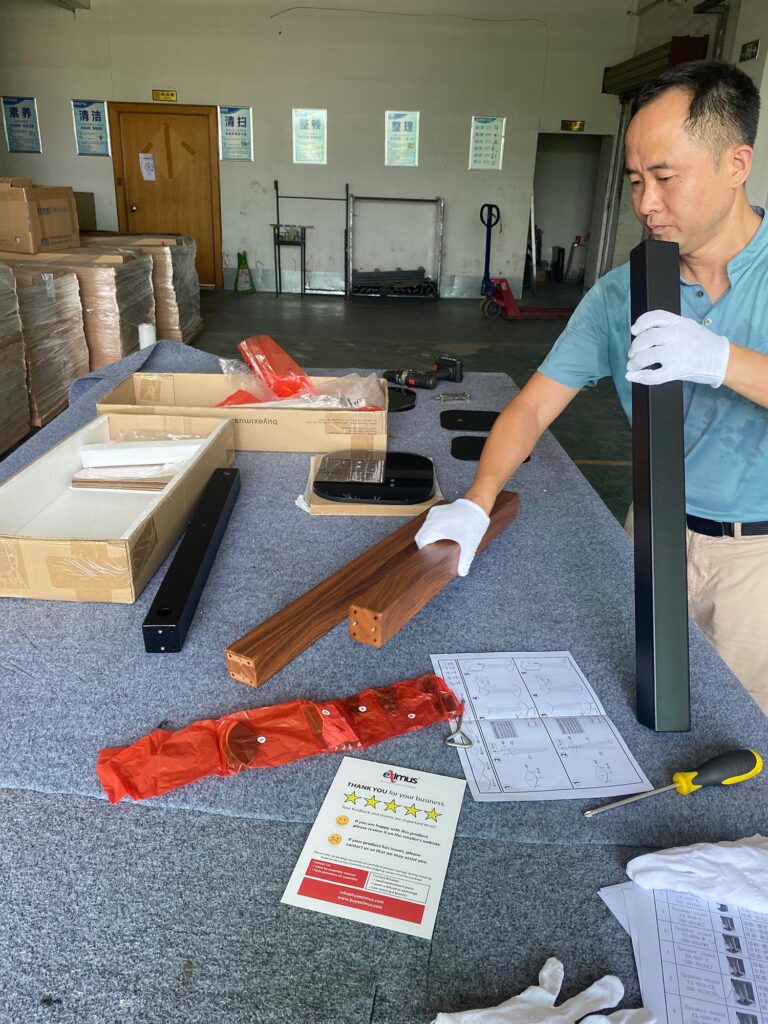
CNC Machining and Precision Manufacturing
CNC machining is another area where design and production requirements meet. Computer numerical control machining allows manufacturers to produce components according to defined digital specifications. It can be useful where a product requires repeatable dimensions, specific shapes or accurately positioned features. For a product such as a speaker stand, precision manufacturing can contribute to consistency across production runs.
However, machinery alone does not guarantee a consistent result.
The manufacturing process still requires appropriate specifications, tooling, inspection procedures and quality controls. The finished components must be checked against the requirements established for the product. That is why manufacturing should be considered as a complete process rather than a collection of individual production techniques.
A manufacturer may have sophisticated equipment, but the value comes from how that equipment fits into the wider production system.
Quality Control Is Part of the Product
Customers rarely think about quality control when they purchase a finished speaker stand. They expect the product to arrive correctly packaged, fit together properly and perform as intended. For the manufacturer, achieving that outcome requires a process for checking the product before it reaches the customer. Quality control can involve inspection of dimensions, finishes, components, assembly and packaging. The exact process depends on the product and its manufacturing requirements.
This principle is not unique to speaker stands. ISO describes process management, customer focus, evidence-based decision-making and continual improvement as fundamental quality-management principles. That broader perspective is important when considering manufacturing partnerships.
Quality should not be treated as something that happens only after production is complete. It needs to form part of the production process itself. For a product manufacturer, consistency is ultimately about making sure that the product a customer receives matches the product that was designed and approved.
Building a Product Range, Not Just a Single Product
A successful product concept can become the foundation for a wider family of products designed around different requirements. The Eximus range illustrates this principle, with the brand offering different speaker stand and mount products for various applications. Panasia’s portfolio identifies Eximus specifically as a manufacturer of speaker stands and speaker mounts.
For a manufacturing partner, a growing product range creates another layer of complexity.
Each new model can introduce new tooling, components, production requirements and quality considerations. At the same time, there may be opportunities to standardise processes and components where appropriate.
This is where experience with product manufacturing becomes particularly valuable.
The goal is not simply to manufacture each product independently. It is to establish a production approach that can support a wider range of products while maintaining the quality and characteristics expected from the brand. That requires communication between product development and manufacturing It also requires a partner capable of adapting as the product range develops.
From Factory Floor to Customer
- Manufacturing does not end when the product comes off the production line.
- A finished product still needs to reach its destination safely and efficiently.
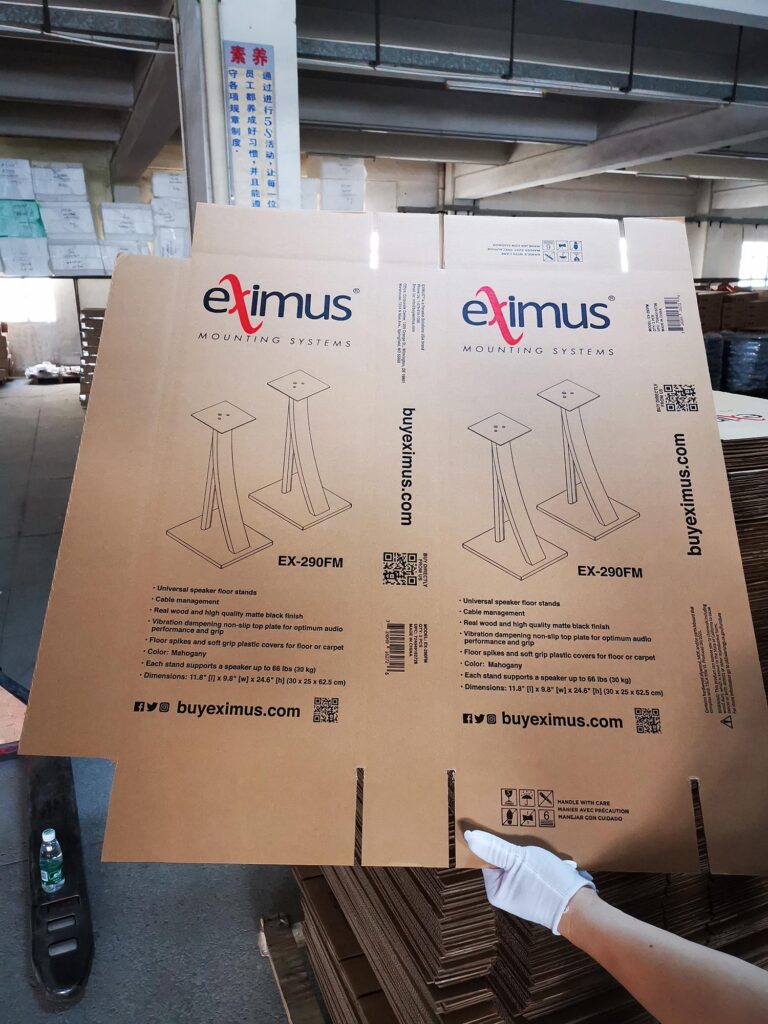
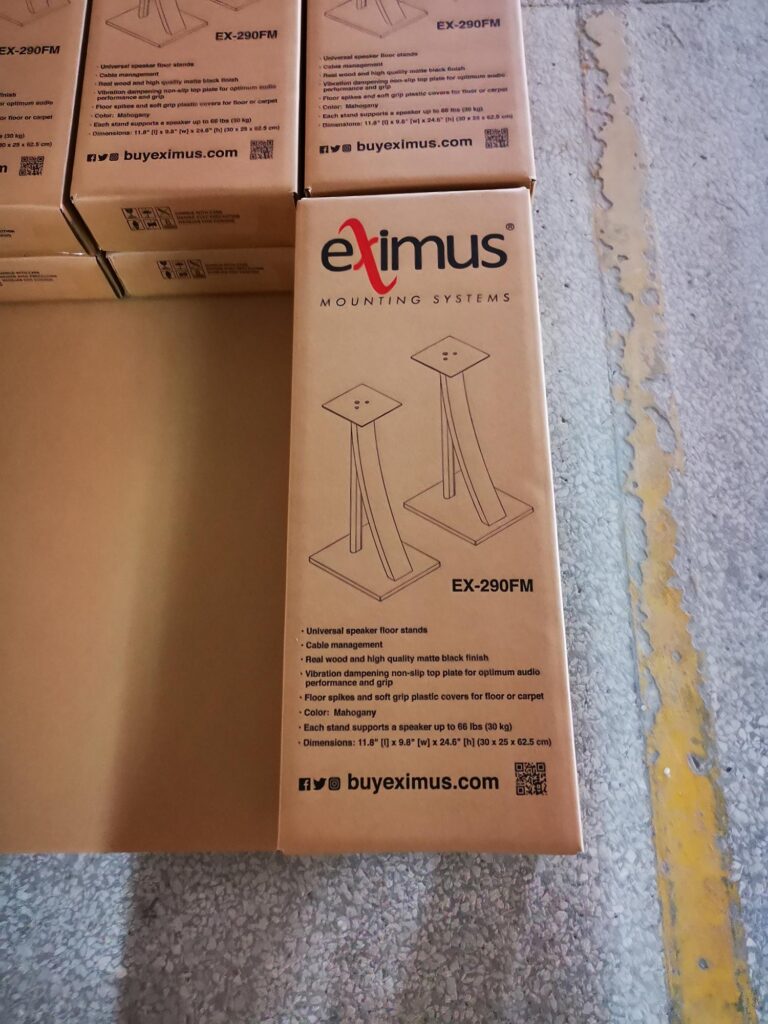
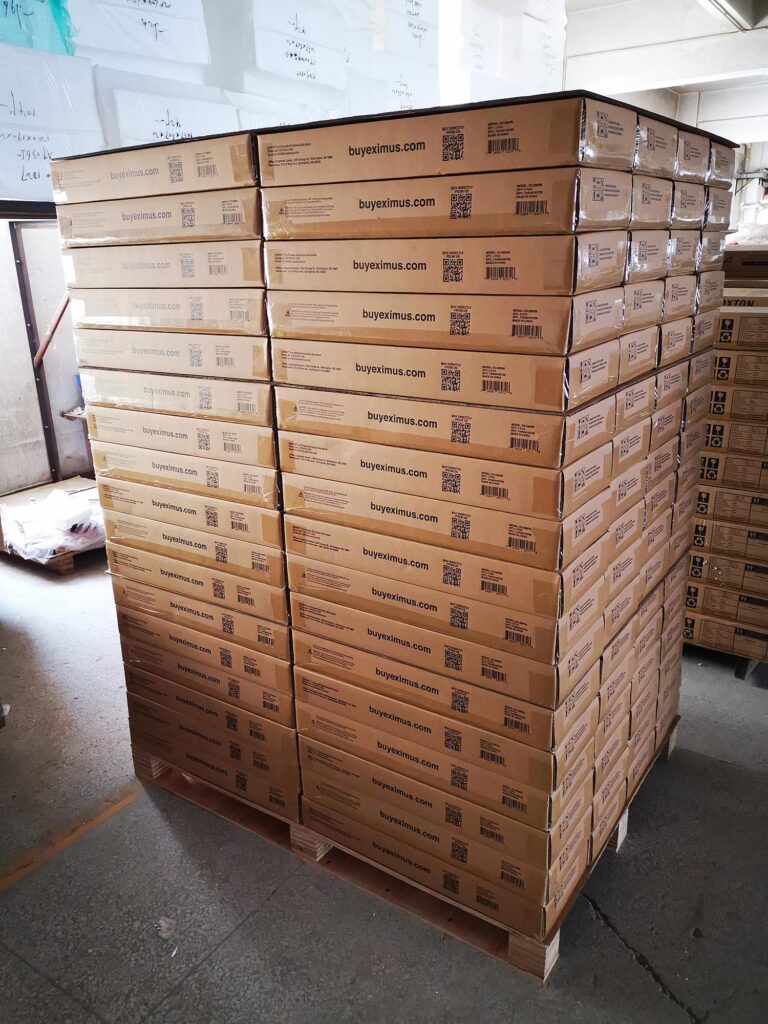
- For a speaker stand, packaging is particularly important because the product can contain multiple components, finished surfaces and parts that need protection during transportation.
- Packaging therefore has to perform several jobs. It needs to protect the product, organise its components and make the product practical to handle throughout the distribution process.
Panasia’s role with Eximus extends beyond production to packaging, shipping and logistics. That end-to-end involvement is significant because problems at any stage of the process can affect the customer experience. A perfectly manufactured product that arrives damaged is still a poor customer outcome.
For this reason, effective product manufacturing needs to consider the entire journey from production to delivery.
What the Eximus Story Says About Choosing a Manufacturing Partner
The Eximus story highlights a broader lesson for businesses developing physical products. Choosing a manufacturing partner should not be based solely on whether that partner can produce an individual component or finished product. Businesses should also consider whether the partner can support the wider manufacturing process.
Questions worth asking include:
- Can the manufacturer understand the original product requirements?
- Can it contribute to tooling and manufacturing engineering?
- Can it maintain consistent quality across production runs?
- Can it support production as the product range develops?
- Does it have appropriate quality-control processes?
- Can it manage packaging and logistics?
- Can it communicate effectively throughout the production process?
These questions become increasingly important as a product moves from development into commercial production. A manufacturer that can only handle one part of the process may leave the product owner coordinating several different suppliers and production stages.
An integrated manufacturing partner can simplify that process by bringing multiple capabilities together.
Why End-to-End Manufacturing Support Matters
The idea of end-to-end manufacturing is particularly relevant for companies that have strong product ideas but do not necessarily have their own manufacturing infrastructure. Product development can involve numerous specialist disciplines.
There may be industrial designers, engineers, tooling specialists, machinists, material suppliers, quality-control teams, packaging providers and logistics companies involved in getting one product to market.
Managing all of those relationships independently can create additional complexity.
Panasia Solutions takes a broader approach. Its manufacturing services span product development, engineering, prototyping, production and global logistics, with the company describing its process as covering the journey from concept through final production.
The Eximus relationship provides a practical example of that model.
Instead of viewing manufacturing as an isolated service, Panasia can become part of the wider process of turning a product concept into something that can be produced and delivered consistently. That is particularly valuable for businesses that want to maintain control over their product vision while working with an experienced manufacturing partner.
What Businesses Can Learn From the Eximus Success Story
The Eximus story is ultimately about much more than speaker stands. It demonstrates several principles that apply to product development across many industries.
A Good Product Needs a Practical Manufacturing Strategy
- A product can be technically impressive, but that does not automatically make it commercially viable.
- Manufacturing needs to be considered alongside design and engineering from an early stage.
- The earlier potential production challenges are identified, the more opportunity there is to address them before they become expensive problems.
Consistency Matters as Much as the First Prototype
- A prototype proves that something can be made.
- A production process proves that it can be made repeatedly.
- Those are very different achievements.
- For businesses moving from prototype to production, this distinction can determine whether a product remains a promising concept or becomes a commercially viable product.
Quality Control Should Be Built Into Production
Quality should not be something that happens only at the end of a manufacturing process. Instead, effective quality management should be integrated into the processes used to develop, manufacture and deliver the product.
ISO’s quality-management framework similarly emphasises a process approach, evidence-based decision-making and continual improvement.
Logistics Are Part of the Customer Experience
Manufacturing, packaging and shipping are connected. The final product experience depends on all three. A manufacturer that can support packaging and logistics as part of the wider process can help reduce the number of handoffs between suppliers and make the route from factory to customer easier to manage.
The Right Partner Can Reduce Complexity
Working with a partner capable of supporting several stages of product development and manufacturing can reduce the number of separate relationships a business needs to coordinate. That does not mean every business needs an entirely outsourced manufacturing process.
It does mean that businesses should understand where their own capabilities end and where specialist manufacturing support can add value.
Panasia Solutions: Turning Product Ideas Into Commercial Products
The Eximus story reflects the broader role Panasia Solutions aims to play for businesses developing and manufacturing physical products. From product development and engineering through tooling, manufacturing, quality control, packaging and logistics, the objective is to create a connected path from concept to finished product.
Panasia currently describes its manufacturing process as covering everything from initial concept through final production. Its services include design, engineering, prototyping, testing, validation, mass production and global logistics.
That does not mean every product requires exactly the same process.
Every product has its own engineering requirements, materials, production volumes, quality standards and supply-chain considerations. The important point is having a manufacturing partner capable of understanding those requirements and helping build the appropriate process around them.
Eximus provides one example of that approach in practice.
The project involved more than manufacturing finished speaker stands. It brought together materials sourcing, design and production support, quality considerations, packaging and logistics as part of a wider manufacturing relationship.