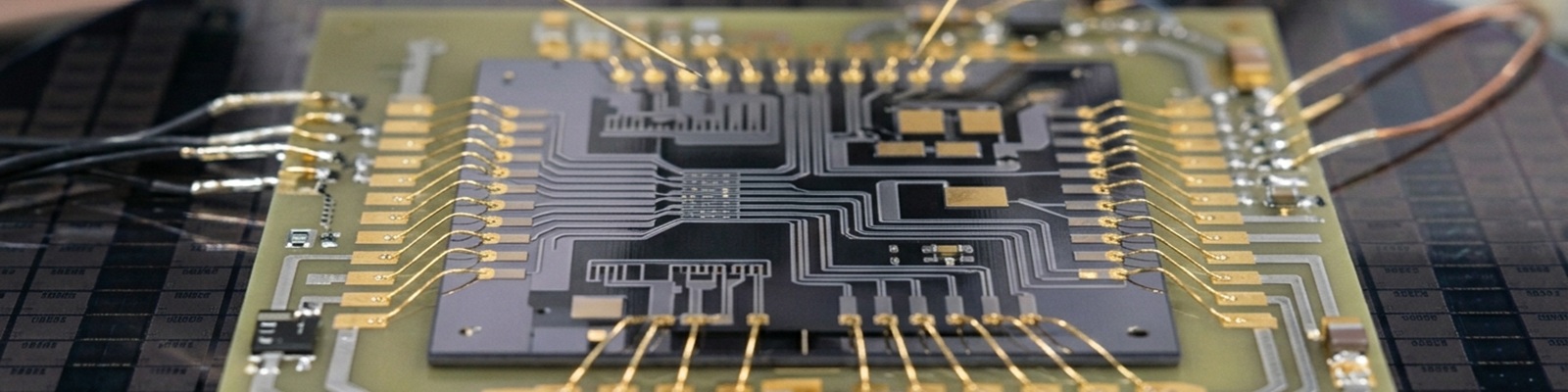
Have you ever wondered how our devices are getting faster, smarter, and more energy-efficient? The secret lies in photonics integration, a game-changing technology that’s revolutionizing next-gen electronics. At its core, photonics manufacturing involves using light-based components to process and transmit data, offering superior speed and efficiency compared to traditional electronic systems. This integration is paving the way for breakthroughs in everything from data centres to consumer gadgets, and companies like Panasia Solutions are at the forefront, leveraging over 25 years of expertise in design, engineering, and manufacturing to bring these innovations to market.
In this post, we’ll dive into what photonics integration means, why it’s essential for the future of electronics, and how photonics manufacturing is driving industry growth. Whether you’re a tech enthusiast or a business leader, understanding this shift can help you stay ahead in a rapidly evolving landscape.
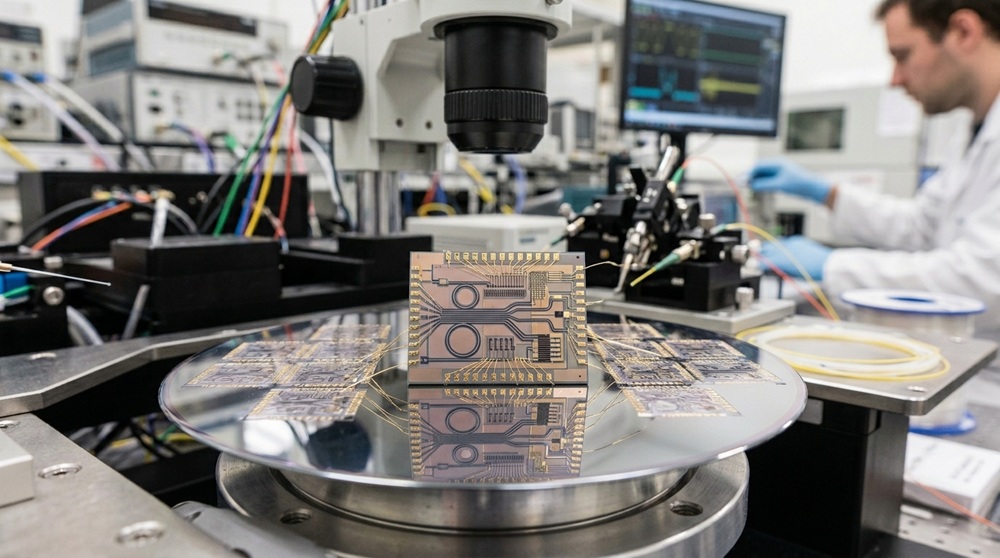
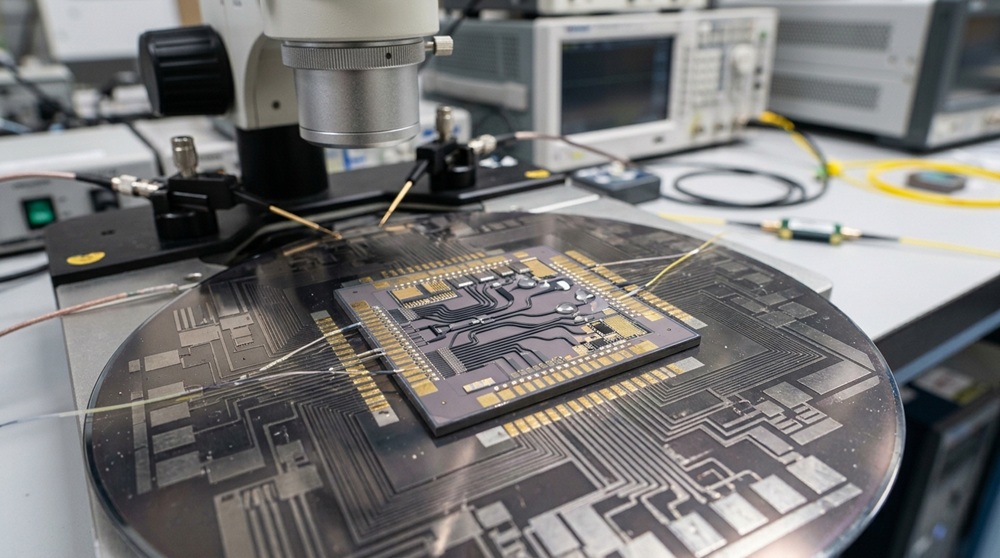
Understanding Photonics and Its Role in Electronics
Photonics is the science of generating, controlling, and detecting photons – essentially harnessing light for practical applications. When integrated into electronics, it creates hybrid systems where optical signals work alongside electrical ones, boosting performance in ways pure electronics can’t achieve.
Think about your smartphone or laptop. Traditional electronics rely on electrons moving through copper wires, which generates heat and limits speed. Photonics manufacturing flips this by using lasers, waveguides, and detectors to transmit data via light, reducing power consumption and enabling lightning-fast processing. This isn’t just theory; it’s already powering real-world applications.
For instance, in telecommunications, photonics enables high-speed fibre optic networks. In healthcare, it supports advanced imaging like optical coherence tomography. And in manufacturing, it enhances precision laser cutting and sensing. The beauty of photonics integration is its versatility – it scales from tiny chips to massive data centres.
The Evolution of Photonics Manufacturing
Photonics manufacturing has come a long way since its early days in the 1960s with the invention of the laser. Today, it’s a sophisticated process involving semiconductor fabrication techniques similar to those used in microelectronics.
Silicon photonics, in particular, has been a breakthrough. By building photonic components on silicon wafers – the same material used for computer chips – manufacturers can integrate optics and electronics seamlessly. This compatibility has slashed costs and accelerated adoption.
Key milestones include the development of photonic integrated circuits (PICs) in the 1990s and their commercialization in the 2010s. Now, we’re seeing large-scale integration with thousands of components on a single chip, as highlighted in recent industry reports. Advances in materials like indium phosphide and gallium arsenide have further improved efficiency.
Panasia Solutions, with its headquarters in Shenzhen and expertise in OEM/ODM manufacturing, plays a pivotal role here. Specializing in end-to-end solutions from concept design to production, the company ensures that photonics manufacturing meets global standards for quality and innovation.
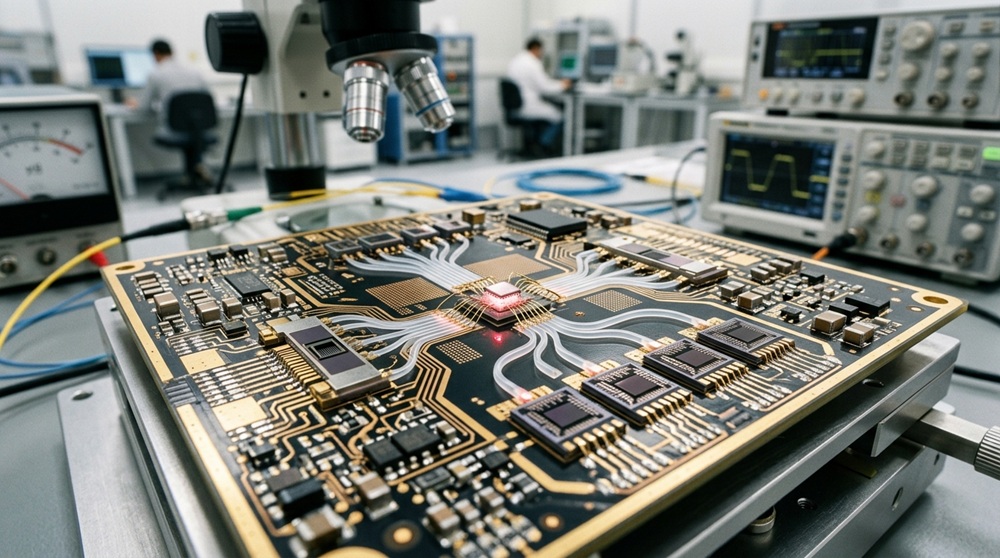
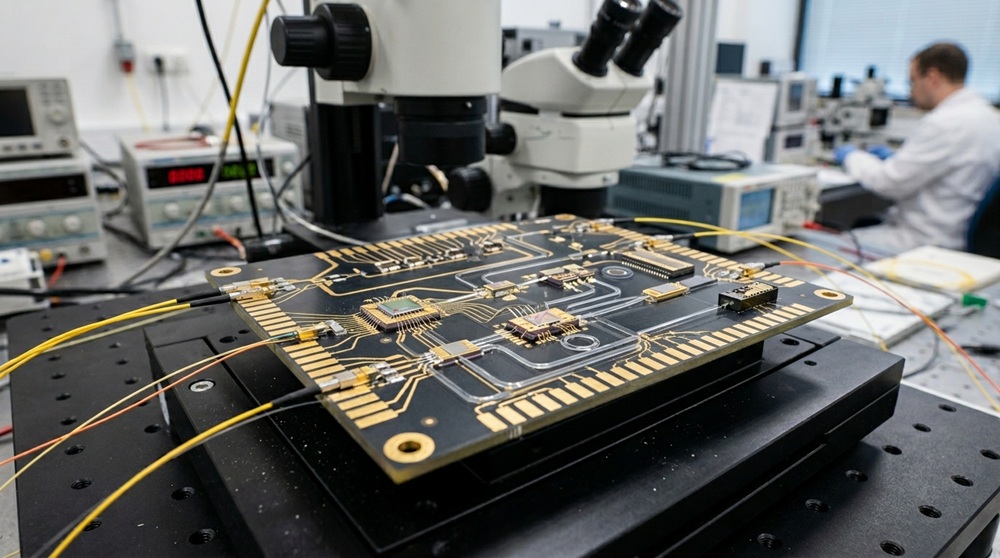
Key Benefits of Photonics Integration in Next-Gen Electronics
Why is everyone buzzing about photonics? Let’s break it down with some clear advantages:
- Energy Efficiency: Photonic systems use less power than electronic counterparts. For example, they generate minimal heat, which is crucial for data centres where cooling accounts for up to 40% of energy use.
- Higher Speeds: Light travels faster than electrons, enabling data rates over 100 Gbps per channel – perfect for AI and 5G networks.
- Miniaturization: Integrating photonics allows for smaller, more compact devices without sacrificing performance, ideal for wearables and IoT gadgets.
- Scalability: Photonics manufacturing supports mass production using existing semiconductor fabs, reducing costs and time-to-market.
- Reliability: Optical signals are immune to electromagnetic interference, making them reliable in harsh environments like aerospace or automotive applications.
These benefits aren’t hypothetical. In consumer electronics, photonics powers high-resolution displays and cameras. In industrial settings, it optimizes automation through precise sensors.
Industry Insights and Market Data
The photonics manufacturing sector is booming, driven by demand for faster, greener tech. According to a recent market analysis, the global photonics market was valued at USD 979.90 billion in 2024 and is projected to reach USD 1,301.49 billion by 2030, growing at a CAGR of 4.8%. North America leads with a 35.5% share, thanks to heavy R&D investments.
Another insight from industry experts pegs the market at USD 1,049.50 billion in 2025, expanding to USD 1,870.10 billion by 2034 at a 6.7% CAGR. Asia-Pacific dominates with 64% share, fuelled by manufacturing hubs in China and Japan.
Key drivers include AI data centres, where photonics reduces latency – critical for machine learning. For instance, silicon photonics transceivers are now handling 800Gbps speeds, as noted in roadmapping studies. In healthcare, photonics enables non-invasive diagnostics, with the medical segment growing at 7.5% CAGR.
Challenges like supply chain disruptions persist, but innovations in co-packaged optics are addressing them. Panasia Solutions, with its ISO-compliant processes and supply chain management, helps mitigate these by offering reliable black box manufacturing for photonic components.
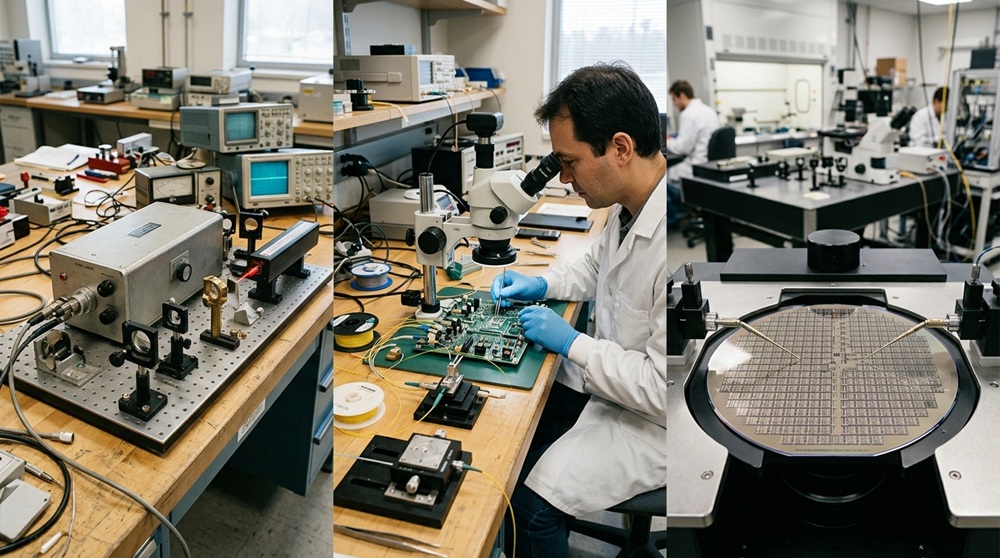
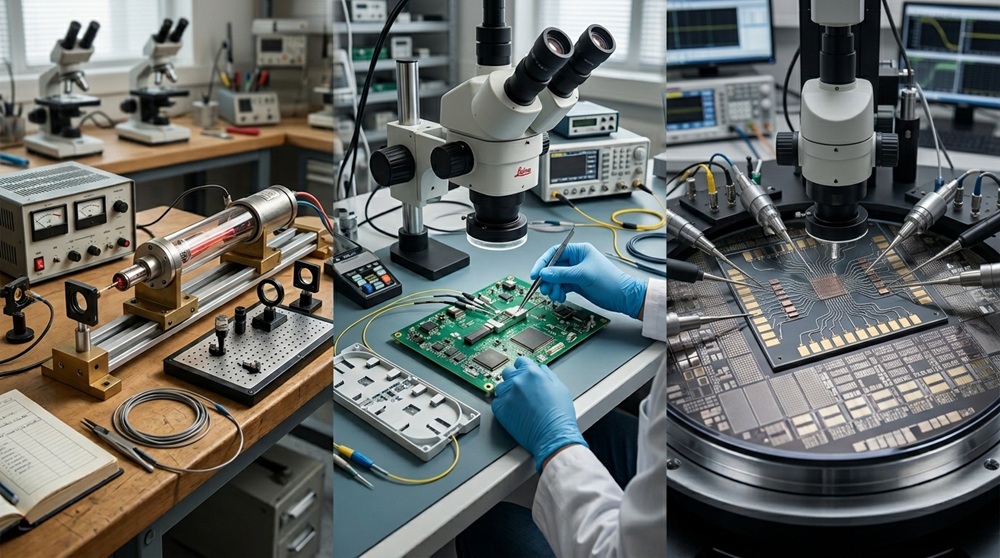
Challenges in Photonics Integration and How to Overcome Them
No technology is without hurdles. Photonics manufacturing faces issues like high initial costs for fabrication tools and compatibility with existing electronic systems.
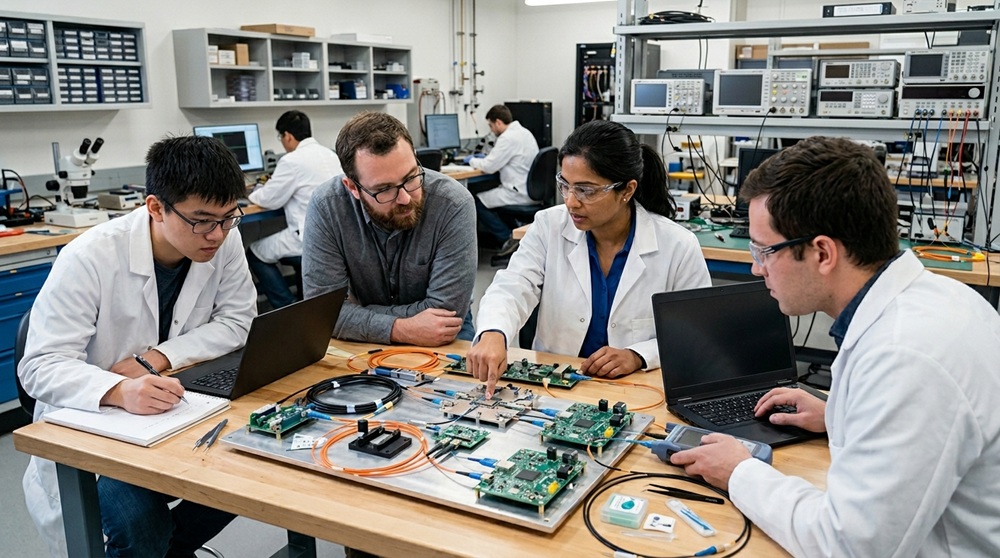
Integration complexity is another: Aligning optical and electrical components requires precise engineering to avoid signal loss. Materials mismatches can cause inefficiencies, and scaling production while maintaining quality is tough.
Solutions are emerging, though. Advanced simulation tools, like those from Keysight, allow for accurate modelling of hybrid systems. Heterogeneous integration techniques, such as 3D stacking, enable tighter photonics-electronics coupling.
Panasia Solutions tackles these with its 25+ years in CNC, SMT, and mold tooling. By providing end-to-end services, including IP protection and retail packaging, they ensure seamless integration from prototype to production.
Panasia Solutions: Leading the Way in Photonics Manufacturing
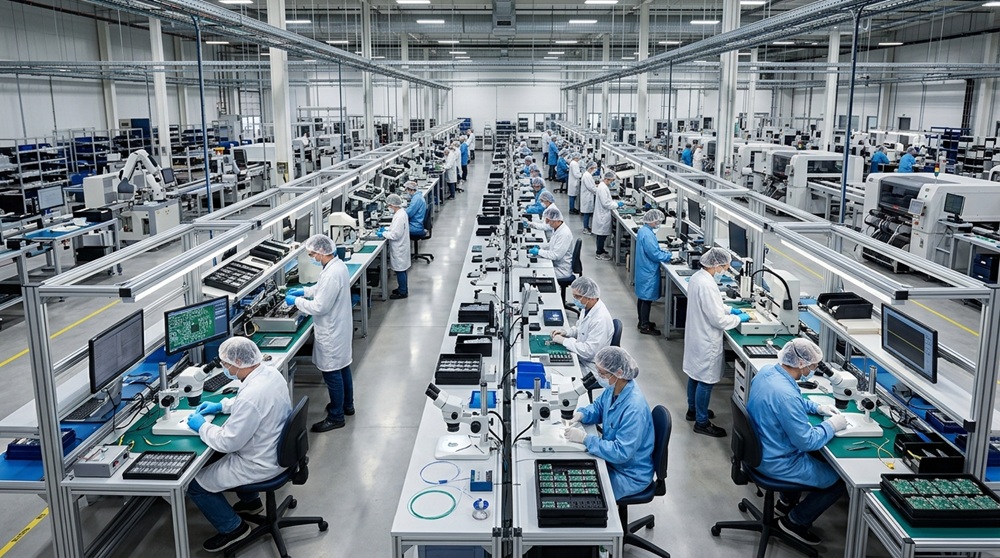
In the competitive world of photonics manufacturing, Panasia Solutions stands out as a leader. With over 25 years of experience in design, engineering, and global manufacturing, the company excels in turning concepts into consumer-ready products.
Headquartered in Shenzhen, Panasia offers comprehensive solutions, including product development, supply chain management, and certification. Their expertise in consumer electronics manufacturing positions them perfectly for photonics integration, where precision and scalability are key.
For example, Panasia’s black box OEM/ODM services ensure confidential, high-quality production of photonic-enabled devices. Clients benefit from their metal stamping, plastics, and silicone capabilities, which are essential for housing sensitive optical components.
As industries shift to next-gen electronics, Panasia’s commitment to innovation – backed by a team skilled in turning ideas into market leaders – makes them an ideal partner.
Future Trends in Next-Gen Electronics Powered by Photonics
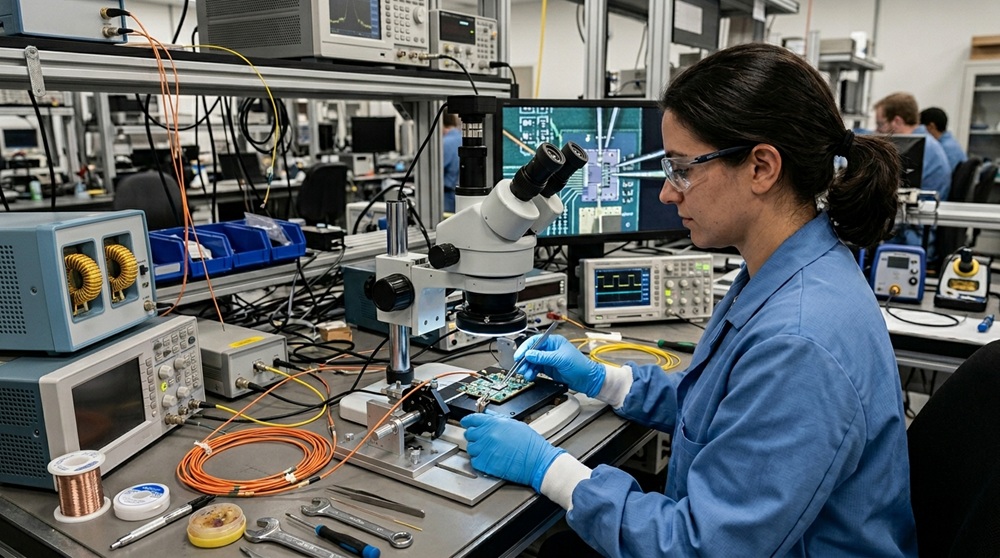
Looking ahead, photonics integration will shape electronics in exciting ways. Quantum photonics could revolutionize computing, offering unbreakable encryption and ultra-fast processing.
In AI, optical accelerators like Hummingbird are already outperforming traditional GPUs in latency-sensitive tasks. Automotive LiDAR, driven by photonics, will enable fully autonomous vehicles.
Sustainability is a big trend: Photonics reduces energy use in data centres, aligning with global green initiatives. By 2030, expect widespread adoption in 6G networks and smart cities.
Panasia Solutions is poised to lead, with their adaptable manufacturing processes ready for these advancements.

Conclusion: Embrace the Light of Innovation
Photonics integration is not just a trend – it’s the future of next-gen electronics, driven by efficient photonics manufacturing. From energy savings to blazing speeds, the benefits are clear, and the market data backs it up.
At Panasia Solutions, we’re committed to helping you navigate this landscape. Ready to integrate photonics into your products? Browse our services or contact our team today to discuss how we can bring your vision to life.